Kentucky Bourbon Trail Passport: It Was Retired In 2025, Here Is What Replaced It
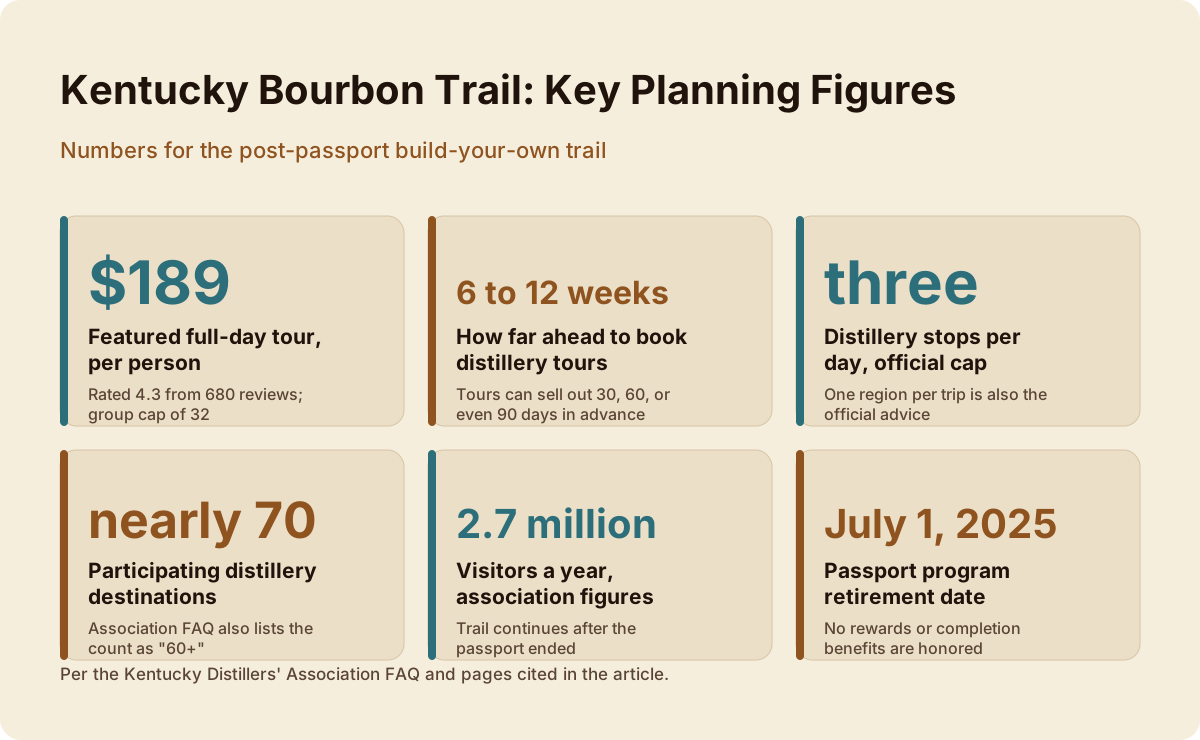
The Kentucky Bourbon Trail Passport and Field Guide program officially retired on July 1, 2025, and the stamps, completion rewards and free T-shirts that came with it are gone for good. The trail itself did not shrink; it grew, and the way to experience it now is planning your own route and booking distillery tours directly.
Short answer
The Kentucky Bourbon Trail Passport and Field Guide program officially retired on July 1, 2025. Outstanding completion benefits are no longer fulfilled, and no stamps, rewards or T-shirts are being issued. What replaced it is a build-your-own approach: nearly 70 participating distillery destinations, direct online booking, and a recommended limit of three distillery stops per day.
Kentucky Bourbon Trail Passport: It Was Retired In 2025, Here Is What Replaced It
The Kentucky Bourbon Trail Passport and Field Guide program officially retired on July 1, 2025. That is the flat answer, straight from the Kentucky Distillers' Association's own FAQ page, and it matters because a remarkable amount of older travel content still describes the passport as a live program with stamps to collect and a free T-shirt to earn. None of that exists anymore. Outstanding completion benefits are no longer fulfilled, no new booklets are being stamped, and the trail's organizers have moved to a different model entirely, one they call Build Your Own Bourbon Trail.
What did not end is the trail. Kentucky bourbon tourism is, by the association's own figures, holding at 2.7 million visitors a year across nearly 70 participating distillery destinations stretching from Northern Kentucky to Western Kentucky. The retirement of a paper booklet changed the souvenir, not the substance. This guide explains what the passport was, exactly when and why it ended, what replaced it, and how to plan a distillery tour trip in Kentucky now that there is nothing to stamp. If you want the practical replacement, Kentucky Distillery Tours keeps a comparison of the guided day tours that now do much of the work the passport used to imply: a structured route across several distilleries in one booked day. If you are starting from scratch, the plain-language guide to how the Kentucky Bourbon Trail works covers who runs it, how the distilleries fit together, and what first-time visitors should expect.
When Did The Kentucky Bourbon Trail Passport End?
The Kentucky Bourbon Trail Passport and Field Guide program officially retired on July 1, 2025, per the Kentucky Distillers' Association FAQ page. The association states plainly that outstanding completion benefits are no longer fulfilled, so no participant who was partway through a booklet should expect a reward, a shirt or any other payout. The program is closed, not paused. Travelers arriving at distilleries with old booklets report being told the same thing at the desk.
The passport worked for years as a simple incentive: pick up a Field Guide, collect a stamp at each participating distillery you visited, and redeem a completed booklet for completion benefits, a system that ran alongside the main trail experience. The association's FAQ page carries the retirement notice directly, and the same page notes the count of participating destinations as "60+," which itself reflects how much the program had outgrown a fixed booklet. A trail that began with 7 distilleries in 1999 and now spans dozens of stops across the state simply no longer fit inside a pocket-sized stamp book.
Two changes happened at once. The passport retired, and the separate Kentucky Bourbon Trail Craft Tour, which had tracked smaller craft distilleries as a second program, was merged into the main Kentucky Bourbon Trail "to create a single experience," as the association's distilleries page puts it. The result is one unified list of destinations and one unified planning problem: with that many stops, spread from a stone's throw apart to as far as 100 miles from one another, the trail's own advice became "no more than three distillery locations per day" and one region per trip. Timing matters as much as geography, so check our season by season timing guide before you lock in dates.
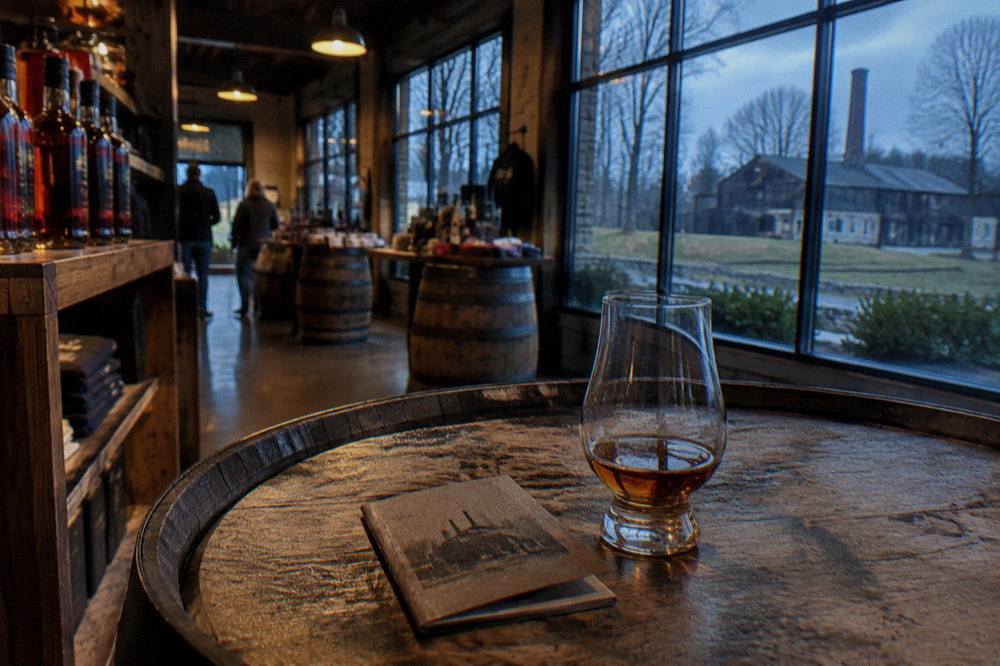
There is a practical consequence worth stating clearly. If a blog post, printed guide or well-meaning friend tells you to "start your passport at the Welcome Center," that instruction is obsolete. The Kentucky Bourbon Trail Welcome Center itself still exists, at 829 W Main Street in Louisville on the first floor of the Frazier Kentucky History Museum, and it remains the trail's official starting point for orientation, maps and tickets. It just no longer hands out stamp booklets. For a fuller picture of the program as a whole, see the companion guide to what the Kentucky Bourbon Trail actually is.
What Did The Passport Program Actually Offer?
The passport offered a physical Field Guide booklet, a stamp at each participating distillery, and completion benefits for finishing it, historically including branded merchandise such as a T-shirt. It was free to start, ran for years, and became a bucket-list ritual for serious bourbon travelers who mapped whole trips around collecting every stamp. It offered no discounts, no tastings and no admission; its value was the game and the keepsake, not savings.
Understanding what was lost explains why the replacement looks so different. The passport was a motivational layer on top of experiences you still had to book and pay for yourself. A stamp did not get you into a tour, and it never covered a tasting fee. What it did was give structure: a checklist that turned a scattered set of distilleries across Kentucky into a single quest, and a reason to drive to destinations you might otherwise skip.
The checklist effect had a real downside, though. Collectors chasing completion tended to race, squeezing four or five stops into a day, which runs against both the trail's official three-distilleries-per-day guidance and the realities of tasting-room pacing. With the passport retired, the official planning model now openly encourages the opposite: fewer stops, better visits, one region per trip. The association's know-before-you-go page frames advance booking windows of often 6 to 12 weeks and suggests Tuesday or Wednesday visits may still have availability when weekends are full.
| Passport era | Build-your-own era |
|---|---|
| Free Field Guide booklet picked up on site | No booklet; planning via the official site and distillery booking pages |
| Stamp collected at each distillery | No stamps issued anywhere |
| Completion benefits, including branded merch | No rewards, no T-shirt, no redemption |
| Craft Tour tracked separately | Craft Tour merged into one Kentucky Bourbon Trail |
| Checklists encouraged visiting many stops | Official advice caps visits at three distilleries per day |
That shift, from a collection game to a curation exercise, is the honest way to describe the change. If what you enjoyed about the passport was the structure, a guided distillery tour supplies it more directly: a fixed route, reserved times and someone else watching the clock. If you want that structure without planning it yourself, the three options below are the day tours from Louisville that best cover the ground.
What Replaced The Kentucky Bourbon Trail Passport?
What replaced the passport is a build-your-own model: one merged Kentucky Bourbon Trail of nearly 70 participating distillery destinations, direct online booking with each distillery, and official planning guidance that caps visits at three distillery locations per day and one region per trip. There is no loyalty program, no app-based successor and no stamp. The trail's organizers point to its transportation partners and welcome center as the planning infrastructure instead.
The Kentucky Distillers' Association frames the replacement as Build Your Own Bourbon Trail, and the mechanics are straightforward. You choose a region, choose your distilleries from the unified list on the official distilleries page, and book each tour or tasting directly through the distillery's own reservation system. The association notes that tours and tastings "can sell out 30, 60, or even 90 days in advance," so the booking step is not optional polish; it is the core of the new ritual. Where the passport asked you to show up and collect, the successor asks you to reserve first and show up on time.
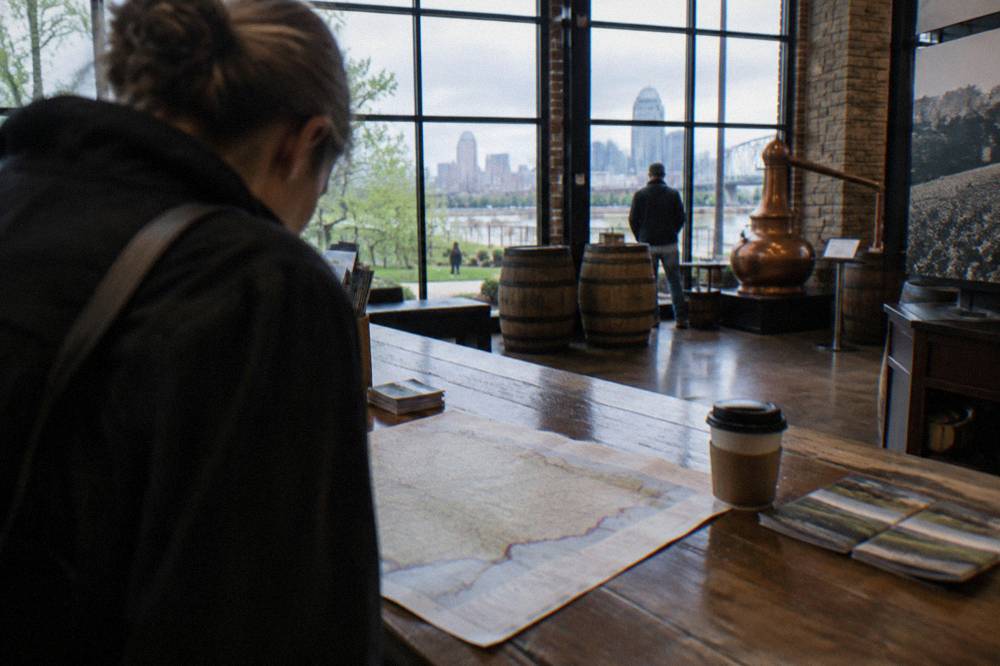
For travelers who do not want to play dispatcher, the trail's transportation page lists vetted partners, including Bluegrass Bourbon Tours, Bourbon Excursions, Central Kentucky Tours, Horse & Barrel Tours and Kentucky Bourbon Boys, alongside a pointed note that rideshare apps are "typically available in larger cities like Louisville and Lexington, but not in our more rural communities." A guided day tour is the version of this that bundles the driver, the reservations and the route into one product. The operator's live listing carries current dates and departure points.
| Planning task | Passport era solution | Current solution |
|---|---|---|
| Choosing which distilleries to visit | Follow the booklet's list | Pick from the merged list on the official distilleries page |
| Booking tours | Call or book each distillery separately | Book each distillery online, 6 to 12 weeks ahead when possible |
| Getting between stops | Self-drive or a transportation partner | Self-drive, a listed transportation partner, or a guided day tour |
| A record of the trip | Stamps in the Field Guide | Your own photos, bottles and receipts |
| Structure and pacing | The completion checklist | The official three-stops-per-day cap and region-per-trip advice |
The featured pick-your-three full day tour is a clean example of the new model in one purchase: from $189 per person, rated 4.3 from 680 reviews, it covers three distillery stops of your choosing among Buffalo Trace, Woodford Reserve, Four Roses, Wild Turkey and others, with hotel pickup from downtown Louisville and a group cap of 32. It is, in effect, a pre-built passport route with the driving and the timing handled. You can see the full tour page for what the day includes, and check the companion write-up on bourbon tours with transportation if a driver is the part you care about most.
Can You Still Collect Anything At Kentucky Distilleries?
No official collection program exists on the Kentucky Bourbon Trail since the passport retired on July 1, 2025. No distillery is issuing trail stamps, and the Kentucky Distillers' Association confirms outstanding completion benefits are no longer fulfilled. What travelers collect now is informal: bottles from each distillery's gift shop, photos on each campus, and personal tasting notes. Some distilleries run their own independent loyalty or club programs, but none is a trail-wide replacement.
That last distinction matters, because distilleries are private businesses and several run their own clubs, barrel programs and mailing lists. Those predate and outlast the passport, but they are single-distillery marketing programs, not a successor. If a distillery offers you a card or a club sign-up, it is worth whatever that one distillery says it is worth, and nothing more. There is no trail-wide stamp, punch card or redemption anywhere in Kentucky now.
What fills the collecting urge instead is mostly bottles, and Kentucky law is friendlier to that than many visitors expect. Under the state's open-container statute, KRS 189.530, unopened bottles secured away from the passenger area, in the trunk for example, are the legal way to carry purchases between distilleries. For the flight home, TSA allows up to 5 liters of spirits between 24 and 70 percent alcohol by volume in checked baggage, in unopened retail packaging, which covers most bourbon. The details are in the companion piece on bringing bourbon home on a plane.
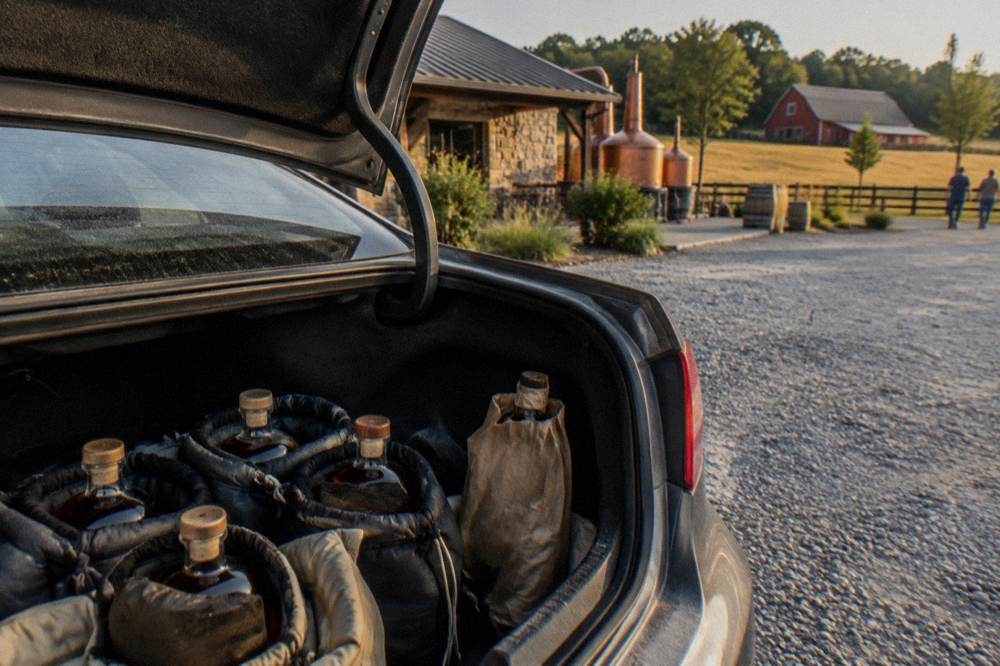
One collecting habit does carry over cleanly: the trail itself has kept growing, which turns "visiting new distilleries" into its own long game. The association announced 11 new destinations in 2025, and the program now describes nearly 70 participating distillery destinations. For travelers who collected stamps, the honest modern equivalent is a checklist of your own against that expanding list, and the official distilleries directory is where to build it.
How Do You Book Distillery Tours In Kentucky Now?
Booking a distillery tour in Kentucky now means reserving directly with each distillery online, ideally 6 to 12 weeks ahead, since the trail's own guidance says tours can sell out 30, 60 or 90 days in advance. A few distilleries keep walk-up experiences, but the association calls planning without booking highly discouraged. Groups of 10 or more must arrange tours in advance. Guided day tours bundle several reservations into one purchase. If Jim Beam is on your list, check what's actually running at its Clermont distillery right now before you pick your dates, since some operations there are currently paused.
Each distillery runs its own reservation system, and the windows differ in ways worth knowing before you plan. Buffalo Trace releases reservation dates weekly on Wednesdays at 10 a.m. Eastern, opening the calendar up to about 8 weeks ahead, and its tours and tastings are complimentary seven days a week, with limited walk-up availability daily. Woodford Reserve books by reservation only, on a rolling window, and does not accept walk-ins for tours, though its gift shop and bar are visitable without a ticket. Four Roses requires tickets only for guided experiences; both of its visitor centers, in Lawrenceburg and Cox's Creek, carry no added cost to enter.
| Distillery | Booking model | Walk-in access | Direct tour cost |
|---|---|---|---|
| Buffalo Trace, Frankfort | Reservations recommended, calendar opens Wednesdays, up to 8 weeks ahead | Limited daily walk-up tours, walk-in tastings and shopping | Complimentary tours and tastings |
| Woodford Reserve, Versailles | Tours and tastings by reservation only | Gift shop and bar only, no walk-in tours | Price is on the distillery's booking page |
| Four Roses, Lawrenceburg and Cox's Creek | Tickets required for guided experiences only | Both visitor centers free to browse | No added cost to visit either visitor center |
| Maker's Mark, Loretto | Advance reservations via its booking system, about 6 weeks out | Grounds accessible without reservation, some areas tour-only | Price is on the distillery's booking page |
| Heaven Hill, Bardstown | Reservations required for guided tours | Some walk-in tasting options possible | Price is on the distillery's booking page |
The timing advice is not marketing. The distilleries page states it plainly, and the know-before-you-go page adds that Tuesday or Wednesday visits may still have availability when weekends are gone. September and October are the busiest months on the trail, stacking peak fall foliage, the Kentucky Bourbon Festival in Bardstown and autumn limited releases on top of ordinary demand. The full picture is in the guide to how far in advance to book the Bourbon Trail.
If you would rather buy one thing than chase five calendars, a guided day tour is the consolidation play. The small-group luxury van full day tour from Louisville, from $233 per person, includes lunch, water, sodas and snacks, runs 8 hours with a group cap of 10, and carries free cancellation; it meets at the Pegasus kiosk in the Galt House East Tower lobby rather than offering hotel pickup. Check availability on the operator's live listing if that format fits your dates, since departure points differ between operators.
How Many Distilleries Should You Visit Per Day?
The official guidance is no more than three distillery locations per day, and one region per trip, per the Kentucky Distillers' Association FAQ. The three-stop cap exists because distilleries sit as close as a stone's throw or as far as 100 miles apart, and because tasting-room visits each run roughly an hour to 90 minutes before travel time. Two stops make a relaxed day; three is a full one; four is a race the trail no longer encourages.
The passport era quietly pushed against this limit, because completion pressure rewarded volume. With the booklet gone, the association's planning advice is the only framework left, and it is calibrated to actual geography. Louisville to Bardstown is about 45 minutes of driving; Bardstown to Loretto, home of Maker's Mark, another 35 to 40; Frankfort to Lawrenceburg about 20. A sensible three-stop day strings together stops within one of those clusters and leaves room for lunch, which matters more than newcomers expect, since tastings hit harder on an empty stomach.
Every guided full-day tour on the current roster, in fact, lands on exactly three distillery stops, which is the market quietly converging on the official cap. That includes the featured customizable day tour, the Kentucky Bourbon Experience at from $239.99 per person with pickup in Louisville, Bardstown or Frankfort, and the multilingual four-distillery pick, which at 8 to 12 hours is the one product that stretches past the guidance for travelers determined to see more. If you are weighing the trade-off, the write-up on doing the Bourbon Trail in one day works through the arithmetic.
A mid-size option worth knowing: the B&C Bourbon Experience, from $249.99 per person, rated 4.9 from 101 reviews, runs 7 to 9 hours in a group capped at 12 with free cancellation, and lets you pick your distilleries. See departure times on the operator's live listing, since the smaller group fills differently than the 32-person coaches.
What Does A Bourbon Trail Trip Cost Without The Passport?
Without the passport, you simply pay as you go: a self-planned Bourbon Trail trip costs the sum of your distillery tour fees, meals, and lodging, with experiences typically modest per stop and the driving on you. Guided full-day tours with transportation run $189 to $289 per person on this site's roster, usually 7 to 10 hours with three stops and often lunch, and Buffalo Trace remains complimentary.
The honest accounting has two layers. Distillery-direct costs are mostly small per stop: complimentary at Buffalo Trace, free visitor-center entry at Four Roses, and prices on each distillery's own booking page elsewhere. The bigger variables are time and transport, especially once you leave Louisville or Lexington, where the association itself warns that rideshare coverage thins out in rural communities like the corridors to Clermont and Loretto.
| Approach | Typical cost | What you handle yourself |
|---|---|---|
| Self-drive, book direct | Distillery fees plus fuel, meals, lodging | All reservations, driving, pacing, parking |
| Guided group day tour | From $180 to $289 per person on this roster | Nothing on the day; meet point and dates fixed |
| Private day tour | From $1,250 per group of up to 6 (small-batch, 10 hours) | Route choice; operator handles driving and lunch planning |
| Full-day tours with lunch included | From $233 to $289 per person | Nothing on the day; meet at the operator's hub |
The deeper cost breakdown, including tasting-fee norms and lodging trade-offs between Louisville, Bardstown and Lexington, lives in the guide to what the Bourbon Trail costs. The short version: the passport's disappearance removed a free program, but it never covered anything you pay for now, so the real cost of a trip is unchanged from 2024. What changed is that the structure you used to get for free now comes either from your own planning or from a paid guided tour.
For groups, the private route deserves one number: a 10-hour private small-batch distillery tour from $1,250 per group of up to 6, rated 5.0 from 142 reviews, with pickup anywhere within 150 miles of Louisville. Check availability on the live listing if your party is six people, since per-head that undercuts most group tours.
Planning Your Trip With The Passport Gone
Plan the way the association now suggests: pick one region, cap the trip at three distilleries per day, book each stop online 6 to 12 weeks ahead, and arrange a driver or a guided tour for rural stretches where rideshare fails. Start at the Welcome Center in Louisville if you want official orientation. Bring a 21-plus ID for tastings, since distillers scan IDs, and expect under-21 guests to be welcome on tours but excluded from tasting areas.
The ID point is worth one plain paragraph because it surprises international visitors. Kentucky's drinking age is 21 under KRS 244.085, and the trail's responsibility page notes distillers authenticate IDs with scanning software, so a passport document rather than a student card is the safe bet. Under-21 travelers "are generally welcome on the standard distillery tours, but may not be permitted in the tastings areas," with each distillery setting its own policy. The full rules are covered in who can join distillery tours.
Beyond that, the post-passport checklist is short. Choose your region, Louisville and Bardstown being the densest corridor. Book your distilleries, watching Buffalo Trace's Wednesday calendar releases. Reserve lodging early for September and October, the trail's busiest months. Line up transportation, whether that is your own car with purchases secured in the trunk, a listed transportation partner, or a guided day tour. And if a checklist is what you miss, keep your own; the trail will keep adding destinations faster than any booklet could hold them anyway. For the first-time framing, the guide to Kentucky Bourbon Trail tours is the natural next stop.
Common Questions About The Kentucky Bourbon Trail Passport
Is the Kentucky Bourbon Trail Passport still available?
No. The Passport and Field Guide program officially retired on July 1, 2025, per the Kentucky Distillers' Association FAQ page, and no stamps or booklets are being issued.
Can you still get a T-shirt for completing the Bourbon Trail?
No. The association states that outstanding completion benefits are no longer fulfilled, so there is no reward, shirt or redemption for partially or fully completed booklets.
What replaced the Kentucky Bourbon Trail Passport?
A build-your-own model: one merged Kentucky Bourbon Trail with nearly 70 participating distillery destinations, direct online booking with each distillery, and official guidance of no more than three distillery locations per day.
Do any Kentucky distilleries still give stamps?
No distillery issues official trail stamps. Some run their own independent loyalty or club programs, but none is a trail-wide replacement.
Do I need to book distillery tours in advance in Kentucky?
Yes, reservations are highly recommended. The trail's official pages say tours and tastings can sell out 30, 60 or even 90 days in advance, and booking windows often run 6 to 12 weeks.
Is the Kentucky Bourbon Trail Welcome Center still open?
Yes. It operates at 829 W Main Street in Louisville, on the first floor of the Frazier Kentucky History Museum, as the official starting point of the Kentucky Bourbon Trail; it just no longer distributes passports.