Can You Bring Bourbon Home On A Plane Or Ship It?
Yes, you can fly bourbon home from Kentucky: TSA allows up to 5 liters of 24 to 70 percent ABV per passenger in a checked bag, in unopened retail packaging. Shipping is far more restricted. Here is what the rules actually say.
Can You Bring Bourbon Home On A Plane Or Ship It?
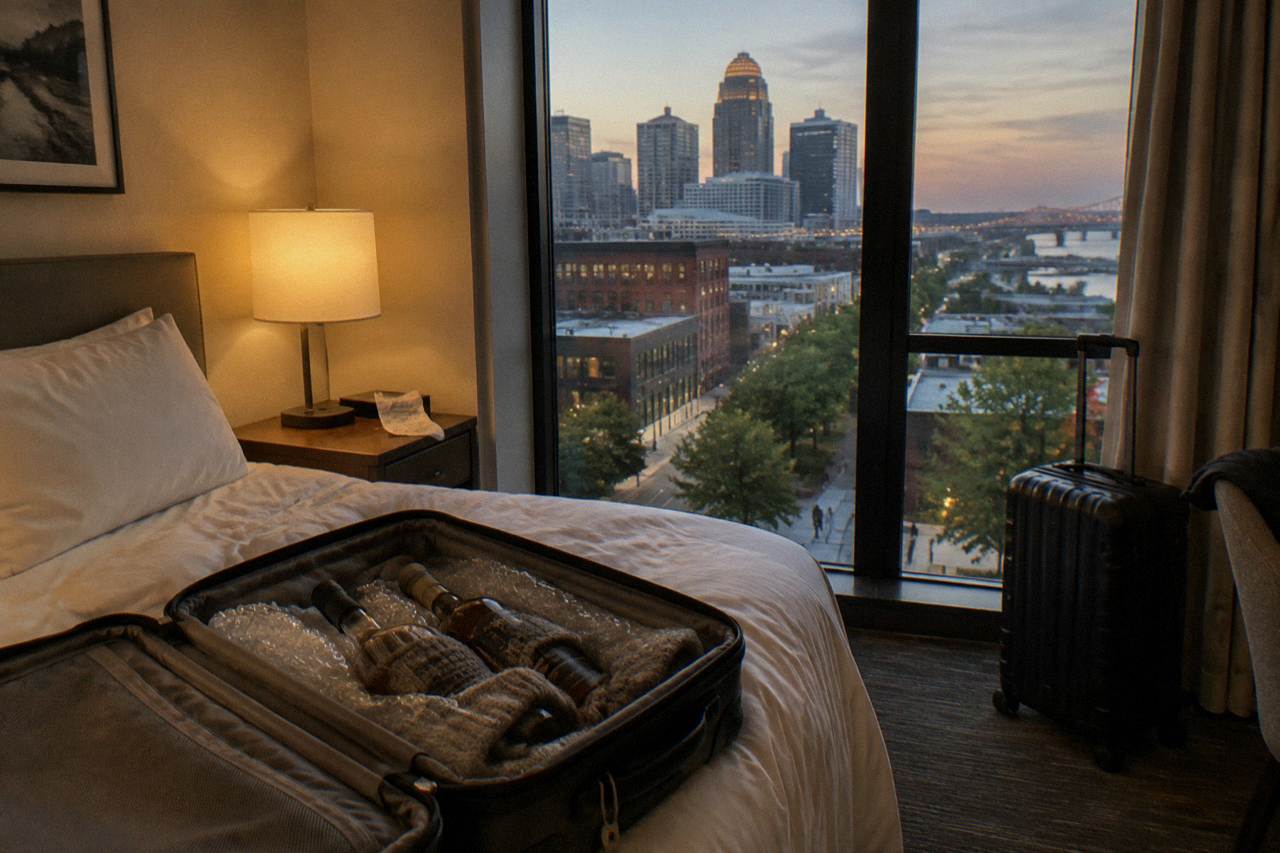
Kentucky poured 2.7 million Bourbon Trail visits in 2025, holding steady with the previous year's record, and a large share of those visitors went home carrying glass. The short answer to the question is yes, with conditions. Federal rules allow bourbon in a checked bag, in real quantity, as long as the bottles are sealed and the whiskey sits in the ordinary alcohol range. Shipping is a different matter, and it trips up more travelers than the airplane does.
Can You Bring Bourbon Home On A Plane Or Ship It?
Yes, you can bring bourbon home on a plane in a checked bag: TSA permits up to 5 liters per passenger of beverages between 24 and 70 percent alcohol by volume, in unopened retail packaging. Shipping bourbon to yourself is effectively not allowed for individuals, so either fly with the bottles, drive them home unopened in the trunk, or ask the distillery about licensed direct-to-consumer shipping.
The distinction between the two halves of the question matters more than most first-time visitors expect. The checked-bag rule is a stable, published federal rule that airport security applies every day across the country. The shipping question runs into a wall of state-by-state alcohol law and carrier policy, and the honest answer for a traveler is that you should check with the carrier and your home state's laws rather than trust a forum thread.
Kentucky's distilleries are set up for this reality. Gift shops sell protective sleeves and padded carriers, tasting rooms answer the suitcase question dozens of times a day, and the trail's own planning guidance pushes visitors toward designated drivers and transportation partners for exactly this reason. The Kentucky Bourbon Trail's responsibility page is blunt about the alternative: rideshare coverage thins out fast outside Louisville and Lexington, so nobody should be sampling barrels and then sliding behind a wheel.
The practical sequence for most fly-in visitors looks like this. Book the distillery tours, taste at three stops a day at most, buy the bottles you genuinely cannot find at home, keep them sealed, pack them in a checked bag with soft clothes around them, and let the airline carry the weight. A guided day tour that ends where it started, like the full day three distillery tour from downtown Louisville, solves the driving half of the problem while you are still in Kentucky: hotel pickup is included, the group travels together in one vehicle, and your purchases stay in the cabin with you instead of a rental car trunk on a winding road.
How Many Bourbon Bottles Can You Pack In A Checked Bag?
The federal cap is 5 liters of spirits per passenger in checked baggage, which works out to six or seven standard full-size bottles with room to spare. Every bottle must be unopened and in its original retail packaging, and the alcohol content must fall between 24 and 70 percent ABV. Most bourbon sits around 40 to 55 percent, well inside the allowed band.
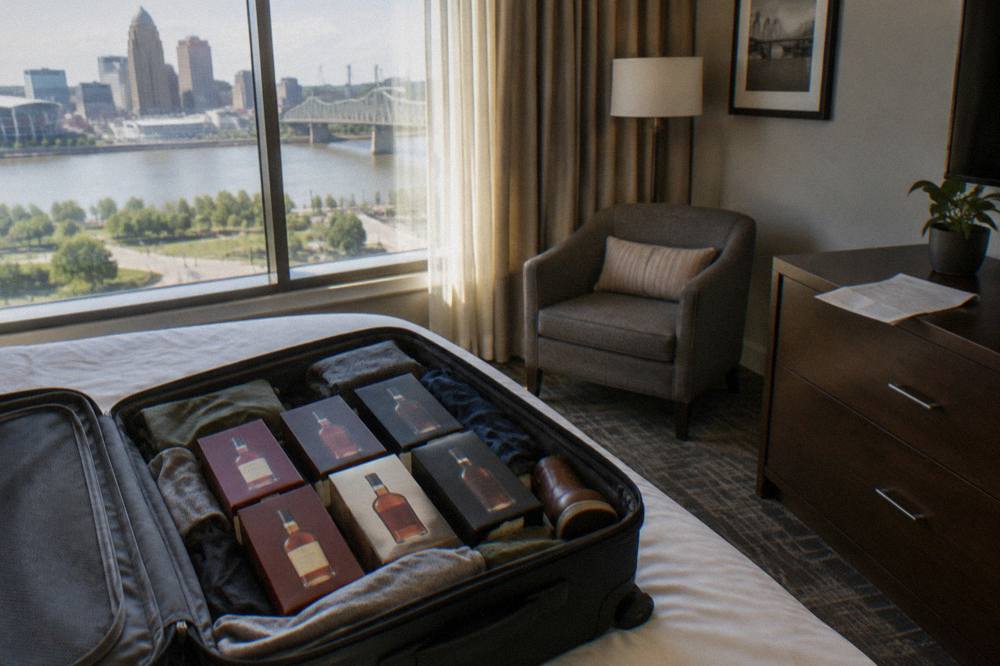
That 5-liter ceiling comes from the Transportation Security Administration's published rules on alcoholic beverages, and it applies to each traveler with a checked bag, not each reservation. A couple flying home can therefore move a dozen or more standard bottles between them without any special paperwork, which is more capacity than the vast majority of Bourbon Trail visitors ever need. Above 70 percent ABV the rules change entirely: high-proof spirits are prohibited in checked baggage altogether, so a cask-strength monster pushing past that line stays in Kentucky unless you drive it home.
The packaging requirement is where travelers lose bottles. "Unopened retail packaging" means the distillery seal is intact and the bottle is the kind of container it was sold in. A bottle you opened for a hotel-room taste, then re-corked, does not qualify, and a decanted flask certainly does not. Security officers can and do reject bottles that fail this test, and a rejected bottle is simply surrendered at the checkpoint.
The rules stack up into a short checklist that is worth keeping in your phone's notes for the ride to the airport:
| What you are carrying | Where it goes | Federal limit | Condition |
|---|---|---|---|
| Full-size bourbon bottles | Checked bag only | 5 liters per passenger | Sealed, original retail packaging, 24 to 70 percent ABV |
| Miniature bottles | Carry-on quart bag | 3.4 ounces per container | Fits the standard liquids bag |
| Opened or re-corked bottle | Nowhere on the plane | Not permitted | Seal must be intact for checked travel |
| Spirit above 70 percent ABV | Not permitted in checked baggage | Prohibited | No exceptions for bourbon proof levels |
The other half of the equation is the airline, not the government. TSA sets the safety floor; your carrier sets the weight limits and any excess-baggage fees. Bourbon is dense: five liters of glass and liquid adds real weight fast, well beyond what a half-empty suitcase expects. A bag built around that load will often cross the standard 50-pound threshold, and paying an overweight fee to move sixty dollars of bourbon is poor economics. Split the load across two travelers or two bags.
Can You Take Bourbon Through Security In A Carry-On?
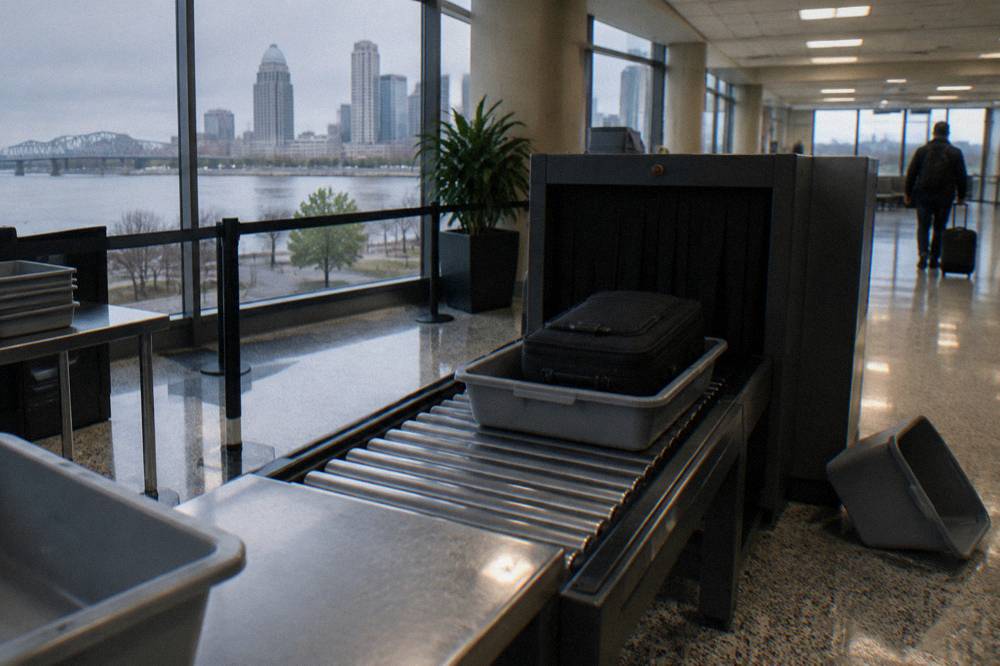
Only in miniature. Carry-on liquids are limited to containers of 3.4 ounces or less, all fitting in one quart-sized bag, and bourbon counts as a liquid like any other. A full-size bottle will be confiscated at the checkpoint. There is no distillery exception, and drinking your own alcohol onboard an aircraft is prohibited under FAA rules unless crew serve it.
The 3.4-ounce rule surprises almost nobody with shampoo but still surprises people holding a distillery-exclusive bottle they assumed was special. It is not. The checkpoint x-ray does not care that the liquid inside is a 12-year single barrel from Lawrenceburg. If it exceeds the limit and it is in your carry-on, the choice at the conveyor is surrender it or miss the flight.
One related rule closes a loophole people ask about constantly: you cannot open your own bottle in flight. Federal aviation rules prohibit passengers from drinking alcohol they brought aboard unless it is served by the crew. Sipping from the bottle you bought in Bardstown at cruising altitude is a violation, and crew are required to treat it as one. Buy the miniature, or wait until you land.
The carry-on question also intersects with the connection question. If your itinerary from Louisville connects through another airport, the checked-bag rule still governs the whiskey, but a tight connection raises a different risk: delayed or misrouted luggage. Bottles in a lost suitcase are usually reimbursed for their purchase price under airline policies, but a limited distillery release cannot be repurchased at any price. If you are carrying something genuinely irreplaceable, consider a direct flight or a durable hard-side case.
Can You Ship Bourbon Home From Kentucky?
For an individual, effectively no. The major carriers do not accept shipments of alcohol from people who are not licensed shippers, and mailing bourbon to yourself is not a legal workaround. The reliable paths are licensed direct-to-consumer shipping arranged by the distillery, where your home state allows it, or carrying the bottles yourself. Always confirm with the carrier and the destination state's law before assuming anything.
This is the half of the question where confident-sounding internet advice goes wrong most often. State alcohol law is a patchwork: some states permit licensed distilleries to ship spirits directly to residents, many do not, and the carriers add their own restrictions on top regardless of what the destination state says. A rule that worked for a friend in one state may fail for you in the next one over. The people who know the current answer for your address are the distillery's gift shop staff, who process these requests daily, and your home state's alcohol authority.
What you should not do is the workaround that gets suggested in travel forums: wrapping a bottle in clothing, declaring it as "fragile items," and shipping it through a common carrier anyway. Undeclared alcohol shipments violate carrier terms of service, and when a bottle breaks in transit and stains an entire sorting facility's worth of packages, the liability lands on the shipper. Insurance will not cover a product you were not allowed to send in the first place.
The distillery route is the legitimate version. Some Kentucky distilleries hold direct-to-consumer shipping licenses and can send eligible bottles to residents of states that permit spirit shipments, with an adult signature required at delivery. Whether your specific bottle and your specific state qualify is a question for the counter at the moment of purchase, not a fact to assume in advance. If shipping is not available to your state, the checked bag becomes the plan, and it is a perfectly good one.
For visitors building a trip around purchases, the smarter play is to concentrate the buying at the end. The cost breakdown of doing the Bourbon Trail shows tasting fees and tours eating most of a day's budget before souvenirs even start, so knowing your luggage limits before day one prevents the classic error: buying four bottles in Bardstown on a Tuesday and discovering on Thursday that your return flight's checked allowance cannot hold them all.
Can You Drive Home From Kentucky With Bourbon In The Car?
Yes, if the bottles stay unopened and out of the passenger compartment. Kentucky's open-container law, KRS 189.530, prohibits open or resealed alcohol within reach of driver or passengers on public roads. Sealed purchases belong in the trunk or another locked compartment. Kentucky's DUI per se limit is 0.08 percent blood alcohol under KRS 189A.010.
The driving rule matters even for flyers, because nearly every Bourbon Trail itinerary involves a car at some point between distillery and hotel. A bottle bought at Buffalo Trace in Frankfort and carried in a backpack on the passenger seat is legal if sealed, but the safer and cleaner habit is trunk storage from the first purchase onward. It removes all ambiguity at a traffic stop, and it protects the bottle in a trunk that stays cooler than a sun-baked cabin.
The tasting half of the day is where the law has teeth. A guided tour exists partly to solve this: the driver is a professional, the vehicle is insured for it, and you can taste at every stop without doing arithmetic about hours and proof levels. That is the entire premise of tours with transportation on the Bourbon Trail, and it is why the trail's own guidance points visitors toward designated drivers and its listed transportation partners rather than improvised solutions. Kentucky's drinking age of 21 applies to every tasting room, and distillers verify age by scanning government-issued photo ID.
Each way of getting bottles home carries its own trade-offs, and it helps to see them side by side before committing to one:
| Method | Practical capacity | Main condition | Main risk |
|---|---|---|---|
| Checked bag on a flight | 5 liters per traveler | Sealed, retail packaging, 24 to 70 percent ABV | Breakage, overweight bag fee, delayed luggage |
| Carry-on | Miniatures at 3.4 ounces or less | Standard liquids bag rules | Anything larger is confiscated |
| Licensed distillery shipping | Set by the distillery and your state | Your state must permit spirit shipments; adult signature | Not available to every state; confirm first |
| Driving home | Trunk space | Bottles sealed and outside the passenger area | Open-container and DUI law; never drive after tastings |
For road-trippers headed to distant states, one caution about crossing lines: this article covers Kentucky law, and open-container and transport rules differ by state. Confirm the rules for each state on your route, keep everything sealed, keep it in the trunk, and the drive home is straightforward.
Which Bourbon Bottles Are Worth Carrying Home?
Prioritize bottles you cannot buy at home: distillery exclusives, gift-shop-only releases, and single barrels selected on site. Widely distributed bourbons usually cost less at your local store than they do after luggage fees and packing risk. The 5-liter checked allowance covers six or seven standard bottles, so treat that as your total buying budget for the trip.
The math of hauling bourbon is unforgiving. A bottle you could buy in your own city for shelf price does not become a bargain after you pad it in a suitcase, risk a broken bottle soaking your clothes, and possibly pay overweight charges. The bottles that justify the cargo are the ones with genuine scarcity: the release sold only at the distillery, the single barrel the staff poured at the tasting bar, the bottle you dipped in wax yourself at Maker's Mark if that experience is on your itinerary.
Buffalo Trace deserves a special note for budget-conscious buyers because it removes the tasting cost from the equation entirely. Its own tours and tastings are complimentary, seven days a week, per the distillery's visit page, with reservations recommended and limited daily walk-up spots. A trip built around Buffalo Trace's complimentary tours can bank the savings toward an extra bottle for the checked bag.
For travelers without a car in Louisville at all, the walk-and-taste options keep purchases light and central. A guided walking bourbon tour through Louisville covers multiple tasting rooms on foot, so whatever you buy is a short carry from hotel to suitcase rather than a day in a hot vehicle.
How Should You Pack Bourbon Bottles For A Flight?
Pack each bottle sealed, in its original retail packaging, wrapped in soft clothes and positioned in the center of a hard-side suitcase, away from the case walls. Fill empty space so nothing shifts, and keep the total under both the 5-liter alcohol cap and the airline's 50-pound bag limit. A broken bottle is the failure mode; design against shifting glass, not against pressure.
A few reliable techniques apply to any bottle you plan to carry home from the trail. Roll each bottle in a bath towel or wrap it in a hoodie, and stand it upright in the middle of the case rather than lying along an edge, because edges are where baggage handlers' impacts land. Shoes make excellent bottle cradles: a full-size bottle wedged inside a boot, surrounded by rolled clothing, moves very little even on a rough connection. Distillery gift shops also sell foam sleeves and inflatable bottle bags, which are worth the few dollars for anything over a hundred dollars in value.
Weight distribution is the quiet variable. Glass plus liquid plus padding adds up faster than people expect, and a bag that was fine at check-in on the outbound flight becomes an overweight bag on the return once six bottles join the laundry. Weigh the packed case on a bathroom scale before leaving the hotel; the five minutes is cheaper than a repacking session on the airport floor with an audience.
Two final habits close out the packing question. First, photograph your bottles and keep receipts, because a claim for damaged or lost luggage goes faster with proof of purchase. Second, if the collection is valuable enough to worry about, consider whether a second cheap duffel as a dedicated bottle bag beats stuffing everything into one case; hard sides on the outside, soft padding on the inside, and nothing hard rattling against a bottle's shoulder.
Common Questions About Flying With Bourbon
Can You Bring Bourbon Home On A Plane Or Ship It?
Yes on the plane: up to 5 liters of 24 to 70 percent ABV per person in a checked bag, unopened and in retail packaging. No on self-shipping: individuals cannot mail spirits through common carriers. Ask the distillery about licensed direct-to-consumer shipping to your state, or carry the bottles yourself.
How many bottles is the 5-liter checked-bag limit?
Five liters covers six or seven standard full-size bottles with a little room to spare. Each traveler with a checked bag gets the full allowance, so two flying companions can move a dozen or more bottles between them.
Can I put a bourbon bottle in my carry-on if it is under the liquid limit?
Yes, containers of 3.4 ounces or less are allowed in your quart-sized liquids bag, which covers the miniature bottles sold in many gift shops. Anything larger goes in a checked bag or stays behind. Drinking your own alcohol during the flight is prohibited unless crew serve it.
Can a distillery ship bourbon to my home state?
Some hold licenses to ship directly to consumers in states that permit spirit shipments, with an adult signature on delivery. Availability depends on the distillery's license and your state's law, so ask at the gift shop counter before counting on it.
Can I drive bourbon home from Kentucky in the car?
Yes, if bottles remain sealed and ride in the trunk or another compartment outside the passenger area under Kentucky's open-container law. Never drive after tastings; use a designated driver, a transportation partner, or a guided tour. Kentucky's DUI per se limit is 0.08 percent.
Does high-proof bourbon face different rules?
Yes. Alcohol above 70 percent ABV is prohibited in checked baggage entirely. Most bourbon sits between 40 and 55 percent and travels fine, but an extreme cask-strength bottle past that line cannot fly.
The rules reward a little planning. A checked bag, sealed bottles, a trunk for the drive, and a guided day tour for the tasting: that combination moves Kentucky bourbon home legally, safely, and with the glass intact, which is exactly what Kentucky Distillery Tours is here to help you arrange.