The Louisville Urban Bourbon Trail: Bars, Whiskey Row And How It Differs From The Distillery Trail
The Urban Bourbon Trail is a Louisville bar and restaurant program, not a driving route to distilleries, and understanding that difference shapes how you plan a bourbon trip to Kentucky.
Short answer
The Urban Bourbon Trail is a downtown Louisville bar and restaurant program run by the city's tourism body, separate from the Kentucky Bourbon Trail's nearly 70 participating distillery destinations. You walk it, you do not drive it, and guided options like a 3-hour trolley tour from $219 or a NuLu pairing walk from $209 cover it well.
The Urban Bourbon Trail is a Louisville institution that gets confused with its country cousin constantly, and the confusion costs travelers real time. Kentucky's official distillery program, the Kentucky Bourbon Trail, launched in 1999 with 7 distilleries and now spans nearly 70 participating distillery destinations across the state, from Northern Kentucky to Western Kentucky. The Urban Bourbon Trail is something else entirely: a curated program of downtown Louisville bars and restaurants, a walkable city experience where the bourbon comes to you rather than you driving to it.
This guide sorts out what the program actually is, how Whiskey Row fits in, what a downtown bourbon day costs, and which guided options, from a bourbon trolley to a NuLu food pairing walk, make the most sense for visitors who would rather not rent a car in Kentucky at all. If you're hoping one of those bar stops pours something genuinely rare, our guide to bourbon's holy grail explains why Pappy Van Winkle is so hard to find and which Kentucky tours get you closest to it.
What Is The Urban Bourbon Trail In Louisville?
The Urban Bourbon Trail is a Louisville bar and restaurant program that channels the city's deep bourbon selection into certified downtown stops, created to keep bourbon visitors in the city between distillery trips. It is a stamp-card concept run by the city's tourism organization, not a route of distilleries, and its stops are bars, restaurants and hotel lounges rather than production sites.
Think of it as the city's answer to a question every Kentucky visitor eventually asks: where do I drink good bourbon without driving an hour? Louisville sits at the top of the Bourbon Trail corridor, roughly 45 minutes from Bardstown and about 50 minutes from Frankfort, and the city's Main Street corridor holds one of the densest concentrations of bourbon bars anywhere in the country. The program wraps a structure around that density, giving visitors a checklist of venues known for serious bourbon lists, and rewarding steady progress through them.
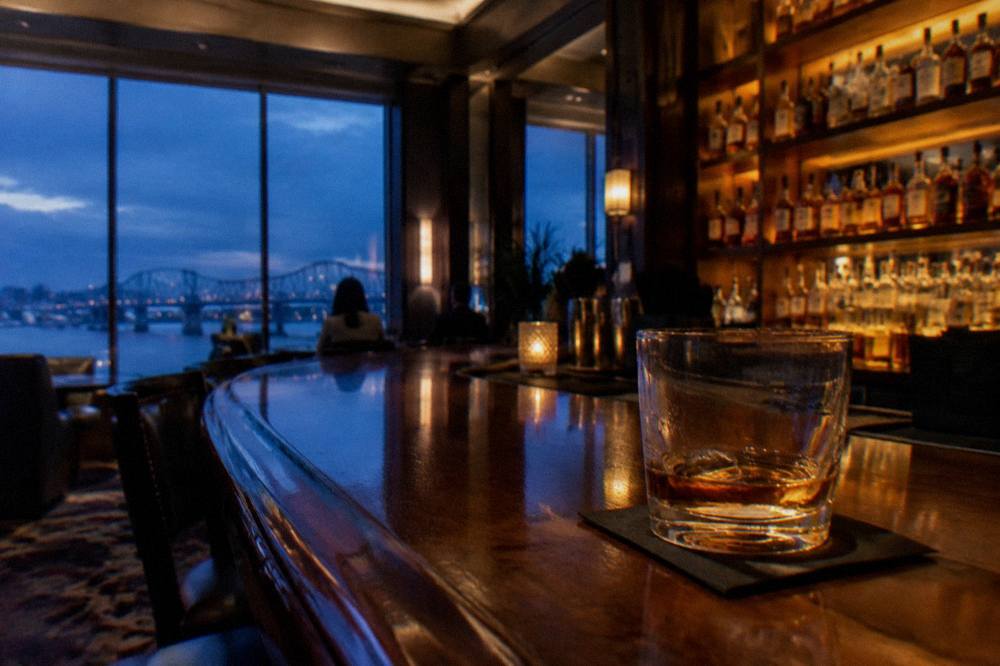
What the program is not matters just as much. It is not a production experience: no stills run on the Urban Bourbon Trail, no warehouses age barrels behind its walls, and no guided distillery tour happens at any stop. The distillery side of a Kentucky bourbon trip, the part with fermentation and barrel houses, happens at places like Buffalo Trace in Frankfort or Woodford Reserve in Versailles, both of which require a drive out of the city. The two experiences pair well, a day of distilleries followed by an evening of bars, but they are separate products with separate logistics.
The distinction matters for the same reason the Kentucky Bourbon Trail Welcome Center, on the first floor of the Frazier Kentucky History Museum at 829 W Main St since 2018, calls itself the official starting point of the distillery trail: Kentucky's bourbon tourism is organized around two axes, the rural production trail and the urban drinking scene, and each has its own planning logic.
How The Urban Bourbon Trail Differs From The Kentucky Bourbon Trail
The Kentucky Bourbon Trail is a statewide program of nearly 70 participating distillery destinations owned by the Kentucky Distillers' Association, requiring driving between production sites, while the Urban Bourbon Trail is a walkable downtown Louisville bar program with no distilleries at all. One is about how bourbon is made, the other is about how bourbon is served, and mixing them up leads to itineraries that do not work.
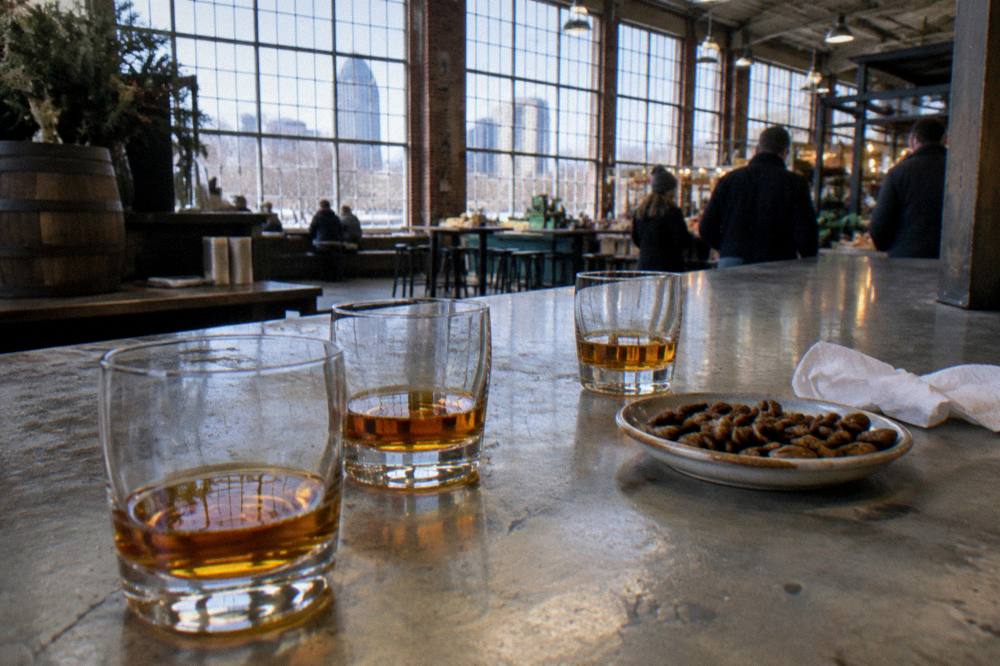
The practical differences pile up fast. The distillery trail rewards a car or a guided bus, spreads stops as far as 100 miles apart, and caps sensible days at no more than three distillery locations per day, a limit the official program states plainly. The urban program rewards comfortable shoes, sits inside a compact downtown grid, and can absorb an entire evening without a single mile of driving. Tastings at distilleries are structured, seated, ID-checked events; pours at city bars are ordinary bar service with an extraordinary selection behind the glass.
| Feature | Kentucky Bourbon Trail | Urban Bourbon Trail |
|---|---|---|
| What it is | Statewide distillery program | Louisville bar and restaurant program |
| Who runs it | Kentucky Distillers' Association | Louisville tourism body |
| Type of stop | Working distilleries, nearly 70 destinations | Bars, restaurants, hotel lounges |
| Transport | Car, bus or guided tour required | Walkable, no vehicle needed |
| Typical experience | Production tour plus guided tasting | Bar pours, flights, paired dinners |
| Booking pressure | Tours can sell out 30 to 90 days ahead | Walk-in friendly, reservations for dinner |
One more piece of housekeeping: the distillery trail's own Passport & Field Guide program, the booklet with stamps you collected at each distillery, officially retired on July 1, 2025, and the former Craft Tour merged into the single main trail. Neither change touches the Urban Bourbon Trail, which is a separate program, but search results blur them together, and travelers still arrive asking where to get a passport stamped. The answer today is that the distillery-side program no longer runs; the city-side bar program carries its own participation mechanics.
If your trip leans toward the distillery side, the planning guide on Kentucky Bourbon Trail tours covers the driving routes, and the piece on bourbon tours with transportation handles the designated-driver question. For the city side, read on, because downtown Louisville is where the walking and trolley products shine.
Whiskey Row And The Downtown Bourbon Scene
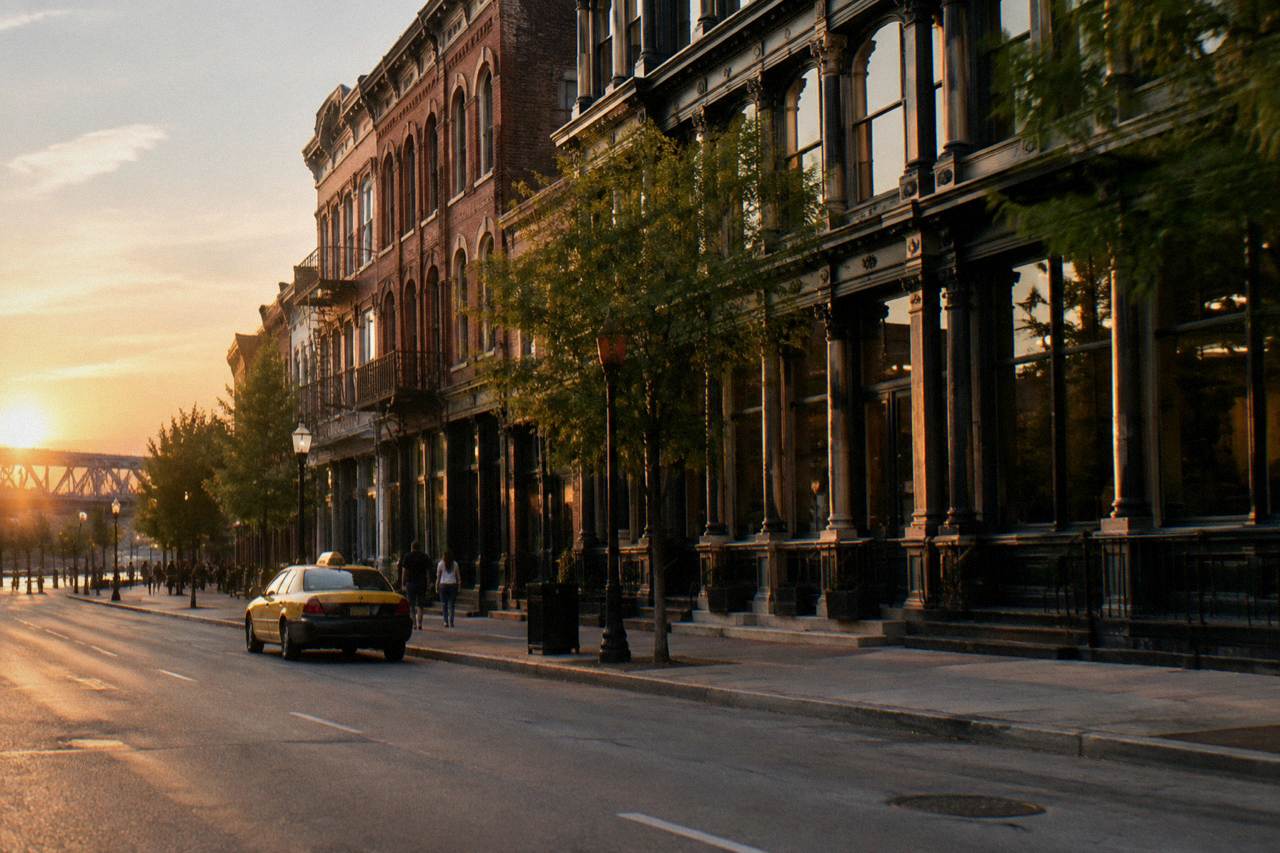
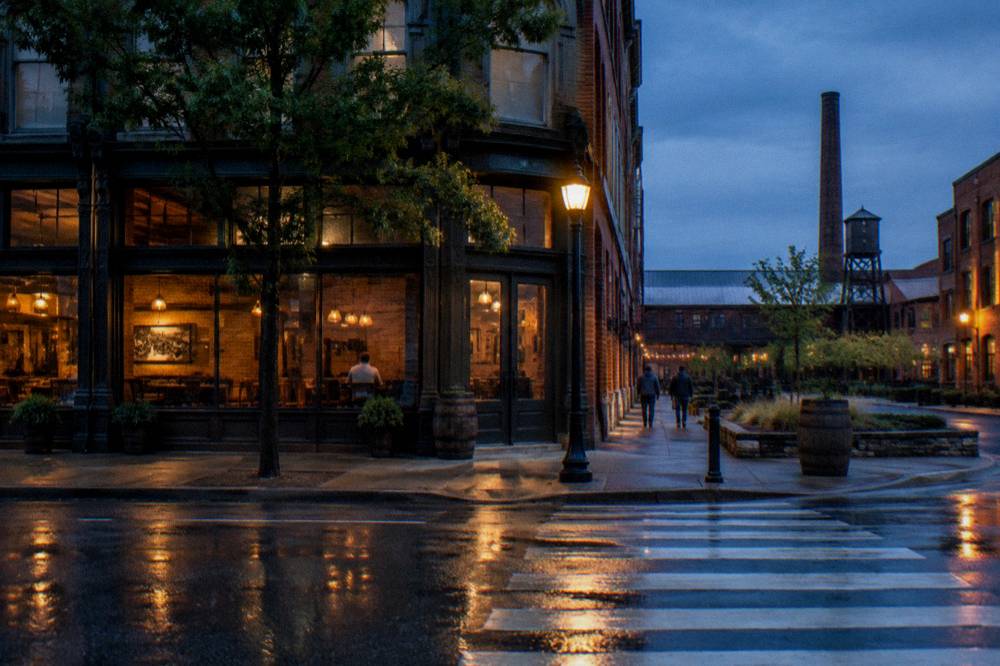
Whiskey Row is the historic Main Street block in Louisville where the bourbon industry once headquartered its offices and warehouses, now restored into a strip of bars, restaurants and modern distillery experiences at the heart of the Urban Bourbon Trail's footprint. It is the closest thing the city has to a bourbon main street, and it anchors any walking bourbon day.
The row's bona fides are real. Louisville's Main Street housed the offices of bourbon barons and the industry's commercial machinery in the distilling industry's early commercial era, and the cast-iron and brick facades survive in one of the best-preserved historic streetscapes in the country. Today that block and its surrounding grid deliver exactly what the Urban Bourbon Trail promises: bourbon lists measured in hundreds of bottles, bars dedicated to single-barrel finds, and food kitchens that treat bourbon pairing as a craft rather than a novelty.
The downtown scene also contains actual working distilleries, which blurs the urban and rural categories in a useful way. Evan Williams operates a full distillery experience on the row itself, and the city's Urban Bourbon Trail coverage flows naturally into single-distillery visits that require no car whatsoever. The deeper comparison between the state's two biggest bases is covered in is Lexington or Louisville better for the bourbon trail, but the short version favors Louisville hard for anyone without a rental car.
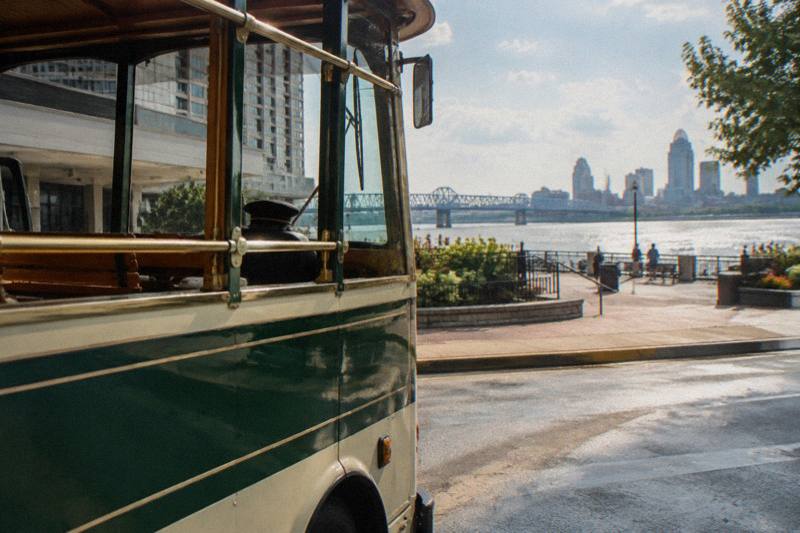
For visitors who want structure, the trolley format is the downtown classic. The 3-hour bourbon trolley tour with distillery stop boards a historic trolley outside One Riverfront Plaza next to the Galt House Hotel, runs 3 hours, includes a distillery stop plus bourbon pours, cocktails and bourbon-infused snacks, and costs from $219 per person for groups capped at 12. It rates 4.9 from 26 reviews, with free cancellation, and it solves the row's one real friction point: the walk between scattered clusters of bars in Kentucky summer heat or winter wind. Check availability on the operator's listing for the dates you want, since trolley seats are limited to 12 per departure.
For a fuller picture of what the city offers beyond one block, the Louisville bourbon tours guide maps the full set of guided options.
Guided Ways To Do The Urban Bourbon Trail: Walking, Trolley And NuLu Tours
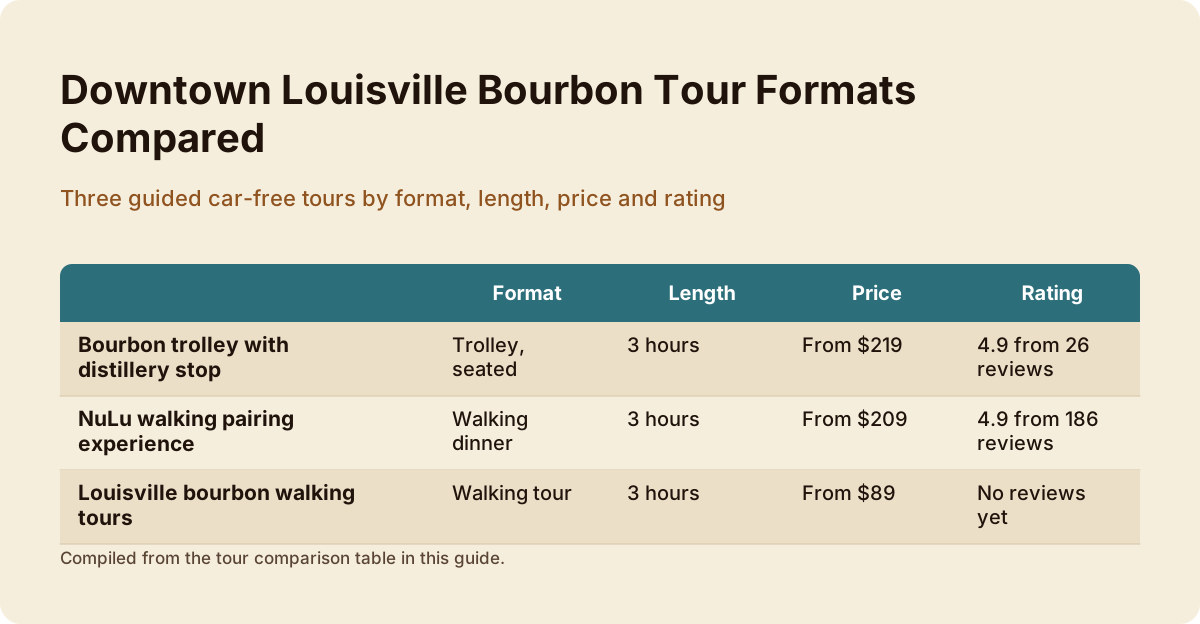
Three guided formats cover downtown Louisville bourbon: a historic trolley tour from $219 per person with a distillery stop, a NuLu walking food-and-bourbon pairing dinner from $209 per person, and a general bourbon walking tour from $89 per person, all free-cancellation and all car-free. Each trades a different balance of education, food and walking distance.
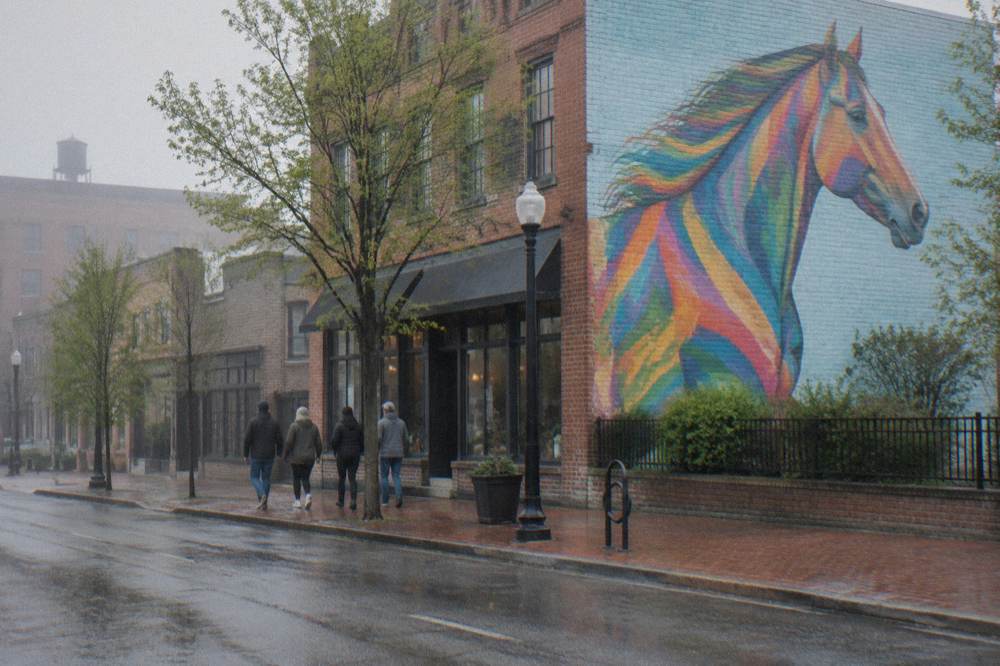
The walking pairing format is the most complete evening. Beyond the Barrel: the NuLu Walking Bourbon & Food Pairing Experience runs 3 hours from the rainbow horse mural at 820 E Main St in the NuLu district just east of downtown, and it is effectively a full dinner spread across paired bites, bourbon tastings and craft cocktails, capped at 12 guests. It rates 4.9 from 186 reviews, the deepest review pool of any downtown product on the roster, and costs from $209 per person.
The general walking format is the budget entry. Louisville Bourbon Walking Tours, run by Mint Julep Experiences from the Pee Wee Reese statue at Louisville Slugger Field, also runs 3 hours at from $89 per person with free cancellation; it carries no reviews yet, so judge it on operator reputation and price rather than a rating. It threads downtown distilleries on foot, which is the purest expression of the Urban Bourbon Trail idea: bourbon tourism at walking pace, no vehicle, no parking, no designated driver.
The trolley format, covered above on Whiskey Row, is the middle path: seated transport between stops, a real distillery visit folded in, and a route that covers more ground than feet alone would. Comparing the three comes down to appetite, literally. The NuLu walk feeds you a dinner; the trolley pours and rolls; the budget walk covers the most bars per dollar.
| Tour | Format | Length | Price | Rating | Group Max |
|---|---|---|---|---|---|
| Bourbon trolley with distillery stop | Trolley, seated | 3 hours | From $219 | 4.9 from 26 reviews | 12 |
| NuLu walking pairing experience | Walking dinner | 3 hours | From $209 | 4.9 from 186 reviews | 12 |
| Louisville bourbon walking tours | Walking tour | 3 hours | From $89 | No reviews yet | See listing |
A note on pacing: the official distillery-side advice of no more than three distillery stops per day does not bind here, but the underlying logic does. Three hours of tastings is a full experience by any measure, and downtown Louisville's density makes it easy to overshoot. The guided formats enforce their own pacing, which is part of what you are buying.
Single-Distillery Experiences Inside Louisville Itself
Louisville proper holds several real distillery experiences reachable without a car, including the Evan Williams Bourbon Experience at from $23 per person, Angel's Envy's signature tasting at from $31.80 per person, and Copper & Kings brandy tastings at from $38, which lets visitors combine the Urban Bourbon Trail's bars with genuine production stops on foot or a short rideshare.
These city distilleries are the bridge between the two trails. Evan Williams, on Main Street in the Whiskey Row corridor, runs a 1-hour tour and tasting from $23 per person that rates 4.9 from 38 reviews, with free cancellation. Angel's Envy, also downtown, pours a signature tasting with chocolate pairings in a 1-hour experience from $31.80 per person, rating 5.0 from 14 reviews. Both meet at the distillery with no pickup needed.
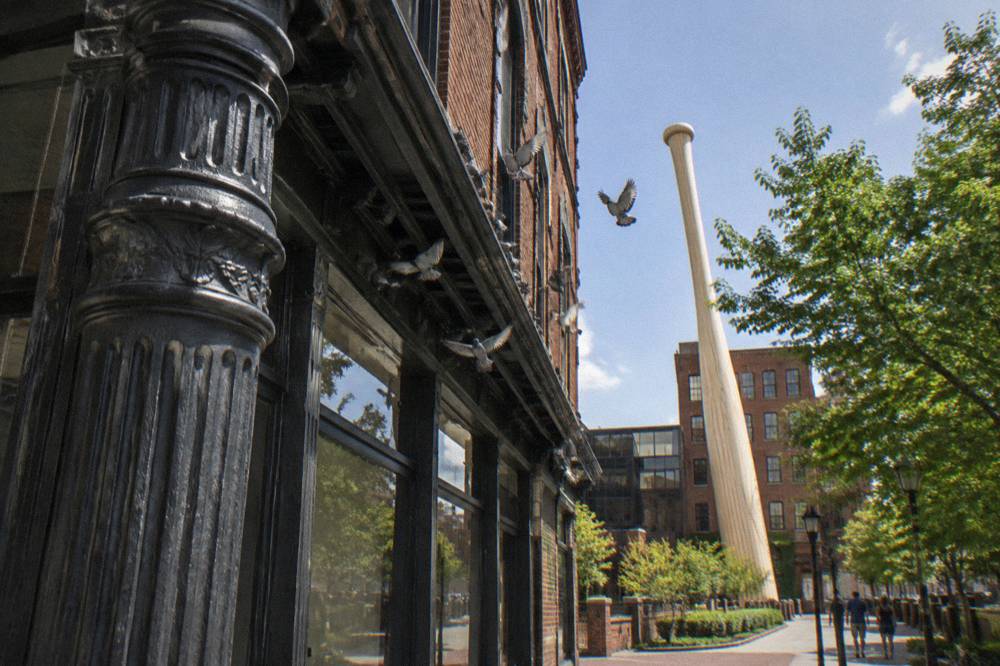
Two others round out the city set. Copper & Kings, the Butchertown brandy house, runs The Brandy in Bourbon Country Experience, a 1-hour tasting from $38 per person rating 5.0 from a thin pool of 4 reviews. And Big Bat Bourbon, beside the Louisville Slugger Museum & Factory, offers a 45-minute custom blending experience from $35 per person with six tastings and an optional bottling of your own blend; it has no reviews yet, so treat it as a novelty priced like one.
| Experience | Neighborhood | Length | Price | Notes |
|---|---|---|---|---|
| Evan Williams tour and tasting | Whiskey Row | 1 hour | From $23 | 4.9 from 38 reviews |
| Angel's Envy signature tasting | Downtown | 1 hour | From $31.80 | Chocolate pairing, 5.0 from 14 reviews |
| Copper & Kings brandy tasting | Butchertown | 1 hour | From $38 | 5.0 from 4 reviews |
| Big Bat custom blending | Museum district | 45 minutes | From $35 | Six tastings, bottle your blend |
Stacking one of these before a guided evening walk is a strong Louisville day: production in the afternoon, bars at night, zero miles driven. The comparison piece on free distillery tours in Kentucky notes that the complimentary-tour tier belongs to Buffalo Trace in Frankfort; the city experiences above are all paid, but modestly priced.
Planning Your Louisville Bourbon Day: Costs, Rules And Getting Around
A downtown Louisville bourbon day is built from separately priced pieces rather than one ticket, with the guided formats running from $89 to $219 per person and the city distillery experiences from $23 to $38, while the Urban Bourbon Trail's bars are priced like normal city bars rather than tour tickets, and Kentucky's drinking age of 21 is enforced with scanned ID everywhere.
Costs on the urban side behave differently from the distillery trail. There is no per-stop ticket to drink at a bar; you pay per pour, and downtown Louisville bar prices look like any major city's. The ticketed items are the guided products and the city distillery experiences, and the table below lays out the components side by side at three planning levels, using roster prices only.
| Budget level | Guided component | Distillery stop | Dinner |
|---|---|---|---|
| Lean | Walking tour from $89 | Evan Williams from $23 | On your own at bars |
| Mid | Trolley tour from $219 | Included in tour | On your own after |
| Full | NuLu pairing dinner from $209 | Angel's Envy from $31.80 | Included in the walk |
The legal footing is the same city or country. Kentucky sets the drinking age at 21 under KRS 244.085, distilleries authenticate IDs with scanning software, and under-21 visitors are generally welcome on standard tours but may be barred from tasting areas, as the official responsibility guidance explains. If anyone in your party is driving, the open-container rule matters even for purchases: Kentucky's KRS 189.530 prohibits open containers in the passenger area, so bottles bought downtown ride unopened in the trunk, and the per se DUI limit is 0.08% under KRS 189A.010. The whole point of the Urban Bourbon Trail is that you can skip the driving question entirely.
Rideshare behaves predictably: reliable inside Louisville's urban core, thin in the rural counties between distilleries, which is why the urban program and the guided bus tours each solve a different problem. The budget walk at from $89 is the cheapest structure on the site, and the city distillery hours run from $23 to $38, so the components of a lean downtown day stay modest before you add bar pours and dinner.
Which Louisville Bourbon Experience Should You Pick?
Pick the NuLu pairing walk if food matters as much as bourbon, the trolley if you want a distillery stop and seated travel, and the $89 walking tour if budget leads, while travelers pairing a city stay with a rural distillery day should book the rural piece weeks ahead and leave the urban piece flexible, since downtown bars do not sell out.
The decision bends on three questions. Do you want dinner included? The NuLu walk from $209 is the only format that is a meal. Do you want to see production? Only the trolley folds a distillery stop into the route, though you can bolt on Evan Williams yourself before any of the three. Is this a splurge night or a value night? The walking tour at from $89 leaves the most room in the budget for the thing the Urban Bourbon Trail exists for, which is buying exceptional pours by the glass.
For the longer trip, the honest pattern is two-part: a guided distillery day out of the city, then an urban evening. The full-day options from Louisville, from the Bourbon Experience pick-three format at from $189 per person to Mint Julep's Buffalo Trace day with lunch at from $289, are compared in the best distillery tours in Kentucky guide. On Kentucky Distillery Tours, each listing carries its live price, rating and cancellation terms, so you can weigh a rural day against a downtown evening with real numbers.
Booking timing splits along the same line. Rural tours and tastings, per the official program, can sell out 30 to 90 days ahead, and peak September and October dates go first. Downtown products carry free cancellation on nearly every listing, which means you can reserve a trolley or pairing dinner early without penalty and rearrange as the trip firms up. That asymmetry, book the country hard, hold the city loose, is the single most useful planning rule for a Kentucky bourbon trip that includes both trails.
Common Questions About The Urban Bourbon Trail In Louisville
What is the Urban Bourbon Trail in Louisville?
It is a bar and restaurant program run by Louisville's tourism body that curates downtown venues with serious bourbon selections. It is not a distillery route and involves no production tours; it is a walkable city experience built around where bourbon is served, not where it is made.
Is the Urban Bourbon Trail the same as the Kentucky Bourbon Trail?
No. The Kentucky Bourbon Trail is the statewide distillery program of nearly 70 participating destinations owned by the Kentucky Distillers' Association, while the Urban Bourbon Trail is a downtown Louisville bar program. The distillery trail requires driving or a guided bus; the urban version is walked.
Can you do the Urban Bourbon Trail without a car?
Yes, entirely. The program's footprint is downtown Louisville, and every guided option covering it, the trolley tour, the NuLu pairing walk and the general bourbon walking tour, is a no-pickup, car-free experience. City distilleries like Evan Williams and Angel's Envy are also reachable on foot or a short rideshare.
How much does a downtown Louisville bourbon tour cost?
On this site's roster, the 3-hour bourbon walking tour starts at $89 per person, the NuLu walking pairing dinner starts at $209, and the 3-hour trolley tour with a distillery stop starts at $219, all with free cancellation. Bar pours at Urban Bourbon Trail stops are priced like normal city bars, not tour tickets.
What is Whiskey Row?
Whiskey Row is the historic Main Street block in Louisville where the bourbon industry headquartered its offices in the distilling industry's early commercial era. Its preserved cast-iron facades now house bars, restaurants and the Evan Williams Bourbon Experience, making it the anchor of any downtown bourbon walk.
Do you need a passport for the Kentucky Bourbon Trail anymore?
No. The distillery-side Passport & Field Guide program officially retired on July 1, 2025, and outstanding completion benefits are no longer fulfilled. The former Craft Tour merged into the single main trail. None of this affects the Urban Bourbon Trail, which is a separate city program.