What To Eat And Wear Before A Distillery Tour
Practical guidance on eating before a bourbon tasting, closed-toe shoes for Kentucky distillery production floors, warehouse layers, ID checks and lunch inclusions on guided tours.
Kentucky bourbon tastings hit differently on an empty stomach, and a rickhouse in October feels nothing like the visitor center you started in. The official Kentucky Bourbon Trail planning guidance asks visitors to arrive with ID ready for scanning, to book ahead and to pace themselves at no more than three distillery stops per day, but it says remarkably little about breakfast, shoes or jackets. This guide fills that gap with practical, sourced advice: what to eat before a tasting so the pours land gently, what to wear on production floors and in warehouses, and which guided tours on this site already include lunch so you do not have to plan it.
What To Eat And Wear Before A Distillery Tour
Eat a real meal with protein and fat one to two hours before your first tasting, wear closed-toe shoes you can stand in for an hour, and bring a layer for warehouse stops. Carry government photo ID, because distillers authenticate it with scanning software before every tasting. The Kentucky Bourbon Trail's own planning pages recommend booking ahead and limiting yourself to no more than three distillery locations per day.
The short version is that a distillery tour is a walking event with alcohol at the end of it. Most standard tours run about an hour to 90 minutes on your feet, through production buildings where the rules are set by safety rather than comfort, and they finish with a tasting of several pours. Every one of those elements has a preparation that makes it better, and none of them requires buying anything special.
Three preparations matter most, in rough order of impact. Food first: bourbon served neat at barrel strength can catch up with an empty stomach quickly, and a tasting of four to six half-ounce pours on no breakfast is a fast way to ruin an afternoon. Footwear second: several distilleries walk guests across production floors where open toes are a genuine hazard rather than a style preference. Layers third: Kentucky rickhouses are unheated and uncooled, so the temperature inside can swing twenty degrees from the visitor center. Everything else, from ID to sunscreen, is a small refinement.
If you would rather fold the food question into the tour itself, some Louisville operators do exactly that. The Beyond the Barrel walk in the NuLu district builds a full dinner of paired bites around its bourbon tastings, and several full-day bourbon tours include a local lunch in the ticket price. We cover both options below.
What Should You Eat Before A Bourbon Tasting
Eat a full meal one to two hours before the tasting, built around protein and fat rather than sugar or alcohol. Eggs, meat, cheese, nut butters, bread and avocados slow alcohol absorption; coffee, skipping meals and drinking on two hours of sleep do the opposite. Nothing at a Kentucky tasting replaces food already in your stomach, so the eating happens before you arrive.
The physiology is simple and worth understanding before you plan the day. Alcohol absorbs through the stomach and small intestine, and food in the stomach slows that process measurably. A meal with fat and protein keeps the alcohol in the stomach longer, smoothing the rise in blood alcohol over the tasting. A sugary breakfast or an empty stomach does the reverse: the pours hit faster, and by the third distillery of a three-stop day the experience degrades for everyone in the group.
Timing matters as much as content. Eating an hour or two before the first tasting gives the meal time to settle without leaving you full. For a morning tour, that means a real breakfast, not coffee alone. For an afternoon tour, lunch before you check in. Louisville and Bardstown both have strong food scenes within a short drive of the major stops, and downtown Louisville tour departure points like the Omni Hotel and the Galt House sit within walking distance of dozens of restaurants. The Mint Julep Experiences hub, for example, is inside Falls City Market at the Omni, which is itself a food hall, so a pre-tour meal is genuinely a two-minute walk from check-in.
What to avoid is the shorter list. Do not drink before the tasting, obviously, but also go easy on carbonated mixers and very sugary drinks beforehand, both of which speed absorption. Heavy spice right before a tasting can also flatten your palate for the bourbon itself. Water is your friend: the Kentucky Bourbon Trail's responsibility page asks visitors to pace themselves and hydrate, and a glass of water between pours is standard practice at most tasting bars. Peanut butter and bourbon is a classic Kentucky pairing precisely because the fat coats the palate and softens the heat.
If your tour runs through a meal window, check the inclusions before you pack snacks. Two of the Mint Julep day tours from Louisville include a local lunch with a fixed menu, the Pegasus full-day tour includes lunch plus water, sodas and snacks, and Bardstown's walking food tour includes all food and drink in the ticket. On tours without an included meal, operators generally allow you to bring a sealed water bottle and a snack for the van, but check the listing's policies rather than assuming.
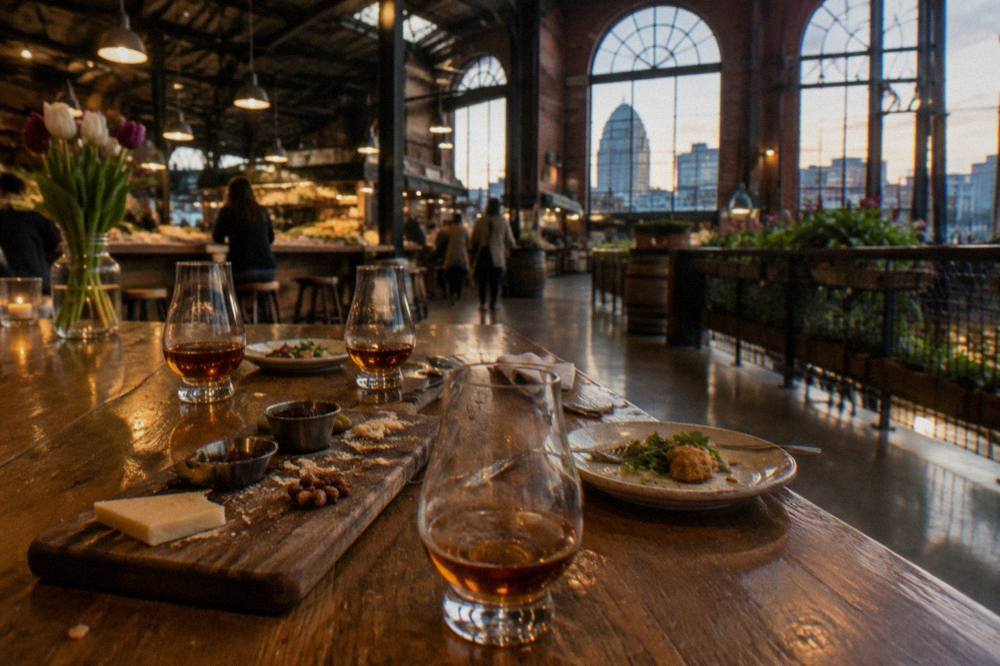
There is a whole category of tour that makes the question of what to eat its entire premise. The Beyond the Barrel walking tour in NuLu pairs a progression of small bites with each bourbon and cocktail, so the food is designed into the tasting rather than eaten before it. At $209 per person for three hours with free cancellation, and rated 4.9 from 186 reviews, it is the strongest food-forward option on this site for visitors staying in Louisville. You can Check availability alongside the full walking tour comparison.
| Situation | What to eat | Why it helps |
|---|---|---|
| Morning tour, 10 a.m. start | Eggs, toast with butter, breakfast meat | Protein and fat slow absorption through the first pours |
| Afternoon tour, 2 p.m. start | A real lunch, finished by 12:30 | Settles before check-in without leaving you full |
| Three-distillery day | A meal before stop one, water between stops | Keeps the day even instead of peaking at stop two |
| Evening tasting only | Dinner first, light on spice | Protects the palate and the blood alcohol |
| Tour with lunch included | Normal breakfast only | The operator handles the midday meal |
A related question comes up often enough to address here: how much a tasting itself costs once you are in the door. We break that down separately in how much a whiskey tasting costs, including the notable fact that Buffalo Trace's own tours and tastings are complimentary.
What Should You Wear On A Distillery Tour In Kentucky
Wear closed-toe shoes with a flat sole, comfortable clothes for an hour or more of standing and walking, and a layer you can remove. Kentucky distilleries walk guests through working production buildings, and some restrict open shoes on production floors. Warehouse stops can be cold in winter, hot in summer and dusty year-round, so dress for a light industrial site, not a restaurant.
Footwear is the one item that can actually block you. Production floors at large distilleries combine wet concrete, hoses, forklift routes and, at some sites, grain dust, and guest routes are routed around the hazards but not always away from them. Closed-toe shoes with grip are the safe choice everywhere, and several distilleries state footwear expectations for specific experiences in their booking details. Heels are a poor idea on the sloped warehouse floors and gravel paths found at many rural sites. You will be standing for most of a standard tour, which typically runs from about 60 to 90 minutes, so whatever you would wear for a long museum visit works well.
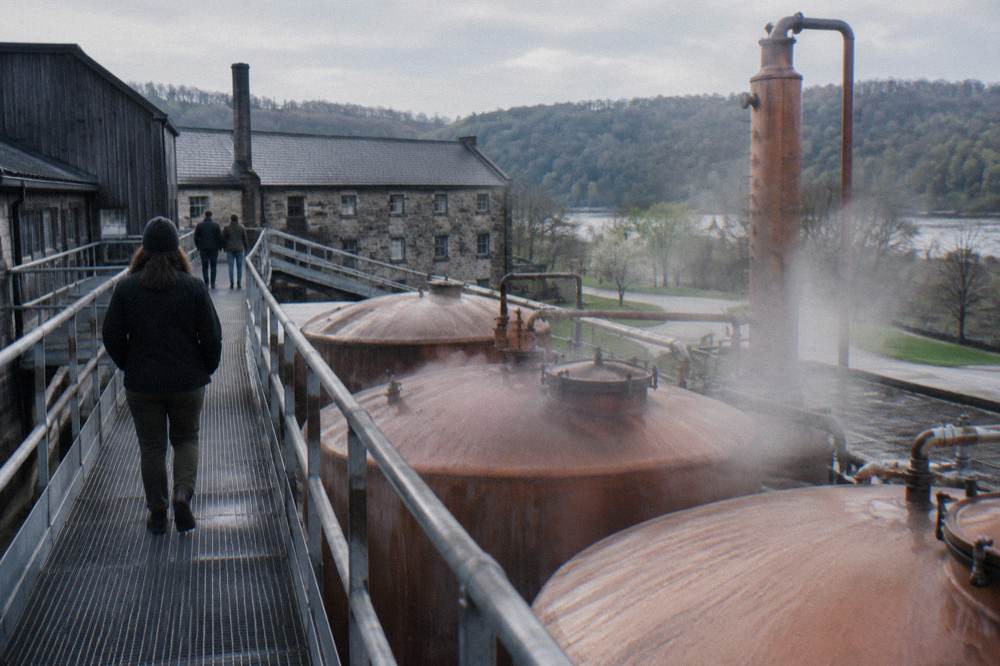
Beyond shoes, think in layers. Kentucky weather is famously changeable, and a full-day bourbon tour moves you between a climate-controlled van, outdoor paths between buildings and rickhouses that hold roughly the outdoor temperature. Rickhouses, the barrel warehouses where bourbon ages, are typically unheated and uncooled by design, because temperature swings are part of the aging process. A winter warehouse stop is genuinely cold. A summer one is genuinely hot, and the upper floors of a multi-story rickhouse can be fifteen degrees warmer than the ground. A light jacket or flannel that ties around your waist solves both problems.
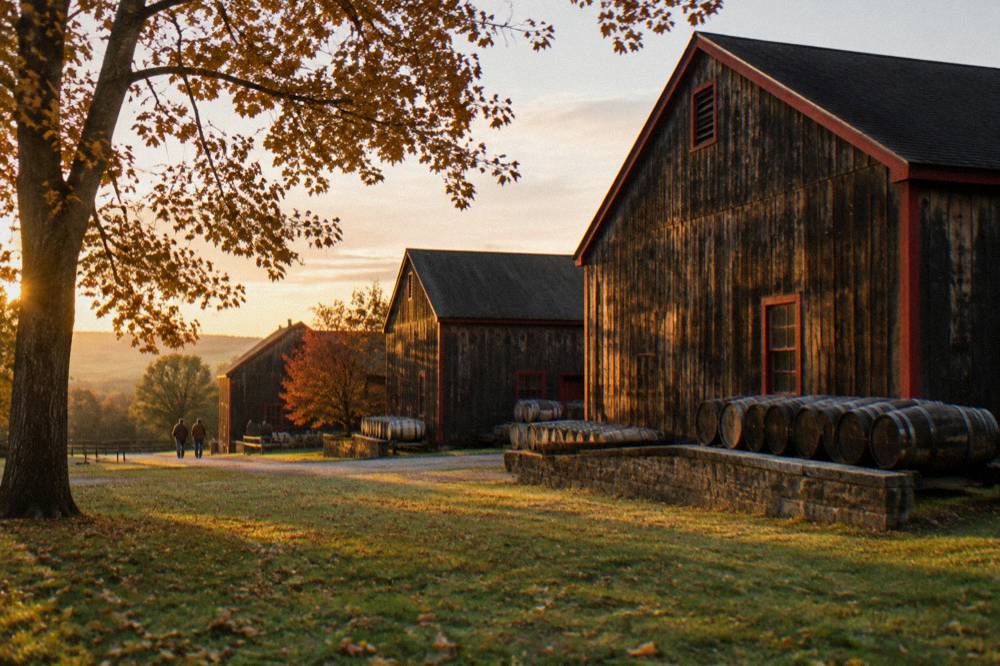
Seasonal specifics for the corridor between Louisville, Bardstown and Lexington: spring and fall are the comfortable middle, though rain is common, so a packable shell earns its space. Summer is humid and hot, favoring breathable shirts, a hat and sunscreen for the outdoor walks between buildings at rural campuses. Winter tours run as scheduled, and the Buffalo Trace visit page, for example, lists closures only for major holidays, so a warm coat and gloves are simply part of the visit. The distilleries themselves do not impose dress codes beyond safety on production floors; this is casual country.
A few smaller items round out the kit. Sunglasses for the drives between stops. A sealed water bottle for the van, since hydration between tastings is the single best way to keep a three-stop day pleasant. Ear protection is provided where needed, such as on tours that pass operating bottling lines. And the one document that matters: your government-issued photo ID, covered in the next section.
Why Do Distilleries Scan Your ID
Kentucky's drinking age is 21, and distilleries authenticate identification with scanning software rather than a visual glance, so bring a physical, government-issued photo ID. Under-21 visitors are generally welcome on standard tours but may not be permitted in tasting areas, and each distillery sets its own policy. A photo of your ID on a phone is not accepted.
The scanning detail surprises first-time visitors. The Kentucky Bourbon Trail's responsibility guidance states plainly that distillers authenticate IDs with scanning software, which means the bartender or tour host runs your license through a reader at the tasting bar. This happens at every distillery, every day, regardless of how obviously over 21 you are. The practical consequences: carry the physical card, not an image of it, and expect the check at the first stop and often again at each subsequent stop, because each distillery verifies independently.
The legal backdrop is Kentucky statute. The drinking age of 21 sits in KRS 244.085, and driving under the influence is per se at 0.08 percent blood alcohol under KRS 189A.010. That second statute is why the responsibility conversation on this site keeps returning to transportation: a day of tastings adds up, and Kentucky's open container law, KRS 189.530, prohibits open containers in the passenger area of a vehicle, with unopened bottles properly secured in the trunk. Guided tours with a driver exist precisely to solve this, and we compare them in the bourbon tours with transportation guide.
For families, the policy detail worth knowing is the split between the tour and the tasting. The official trail FAQ notes that under-21s are generally welcome on standard distillery tours but may not be permitted in tasting areas, with each distillery deciding its own rules. Woodford Reserve's visit guidance, for instance, allows guests of all ages on property and on the tour portion of its standard experience, with minors supervised, while tasting rooms and tasting-only experiences are 21 and over. Jim Beam's visit page states similarly that minors cannot join tastings. If you are traveling with teenagers, the tour itself usually works; the tasting room usually does not. We cover the full picture in the under-21 question.
The ID rule is also why you should not leave your license in the car or the hotel safe. A distillery cannot serve a tasting without the scan, and there is no discretion in the process. International visitors should carry a passport, since foreign licenses sometimes fail the scanner and staff will need the document itself.
Should You Book A Tour That Includes Lunch
Yes, on any full day covering two or three distilleries, a tour with lunch included removes the hardest logistics decision of the day. On this site's roster, the two Mint Julep day tours from Louisville include a local lunch with a fixed menu, the Pegasus full-day tour includes lunch plus snacks and drinks, and the private Rison tours include lunch or snacks depending on the product.
Rural Kentucky is not where you want to be improvising lunch at 1 p.m. with a tour schedule to keep. The main distillery corridors between Louisville, Bardstown, Frankfort and Lawrenceburg have excellent food, but the good options cluster in town centers, and a self-driven day can easily burn 45 minutes of your afternoon just finding parking and a table. An included lunch converts that lost hour into a seated break that is already on the itinerary, which is why the operators that include meals structure the day around them.
The inclusions differ by product, so read the listing before assuming. The Buffalo Trace day from Mint Julep Experiences, at $289 per person for 9 hours 30 minutes, includes a local lunch with a fixed menu and runs 5.0 from 51 reviews. Its sister Bardstown day, covering James B. Beam, Heaven Hill and Lux Row at $285 per person for 9 hours, includes the same lunch arrangement. The Pegasus small-group full day from the Galt House, $233 per person for 8 hours, includes lunch plus water, sodas and snacks on the van. The B&C Bourbon Experience, $249.99 per person for 7 to 9 hours with pickup at the Omni, does not list a meal, so plan a solid breakfast before that one. Both the Mint Julep and B&C products carry free cancellation, and the details are on each live listing.
The pairing alternative, for visitors who want food and bourbon treated as one experience rather than two stops, is the NuLu walking tour this article features. It runs three hours, covers three distillery-adjacent tasting stops with a full progression of paired bites, and ends having effectively served dinner. At $209 per person it costs less than several full-day bus tours, and with a maximum of 12 guests per departure it stays conversational. The trade is scope: no rural campuses, no rickhouses, no countryside drive. Some visitors do both, the NuLu evening for the pairing and a separate full day for the production floors.
Dietary needs are worth flagging in advance. Fixed-menu lunches on included-meal tours can usually accommodate common restrictions, but the operator needs notice, and the listing's contact route is the place to ask. The Bardstown walking food tour, which includes all food and drink at $130 per person, runs with a maximum of 10 guests, which makes special handling easier.
Does The Time Of Year Change What You Wear
Yes, materially. Kentucky summers are hot and humid, winters push warehouse stops below freezing, and spring and fall swing between both within a single day. Peak fall color in the Louisville to Bardstown corridor generally arrives late October to early November, which is also the busiest tour season, so layers plus early booking are the combined answer.
The seasonal logic follows the buildings. A tasting room is climate-controlled. A production floor is semi-open. A rickhouse is whatever the weather is, intensified by height, since heat rises through five or six stories of barrels. In July, the top floor of a rickhouse is the hottest room of your trip. In January, it is the coldest. The same light-jacket-plus-short-sleeves formula covers most of spring and fall, with the jacket upgraded to a real coat for winter and the whole outfit thinned out for summer.
Fall deserves special mention because it is the season everyone wants. The corridor's distillery drives are at their most scenic in late October, the Kentucky Bourbon Festival in Bardstown and the Bourbon & Beyond festival in Louisville anchor September, and the trail's own guidance notes tours can sell out 30 to 90 days ahead in this window. The clothing consequence of festival season is simple: you will walk farther and stand longer than you planned, so the comfortable-shoes advice doubles in weight. We treat the seasonal question in full in the best time of year to visit.
One detail that belongs here rather than anywhere else: rain. Kentucky gets measurable rain in every season, and distillery tours walk outdoors between buildings even in steady rain, since the production buildings themselves stay open. Tour departures are almost never canceled for weather. A packable rain layer, or at minimum a hood, keeps a wet hour from coloring the whole day. Umbrellas work but are awkward on catwalks and in barrel-filled warehouses where space is tight.
Common Questions About Eating And Dressing For Distillery Tours
What To Eat And Wear Before A Distillery Tour?
Eat a full meal with protein and fat one to two hours before the tasting, wear closed-toe shoes you can stand in comfortably, and bring a removable layer for warehouse stops. Carry a physical government photo ID, since Kentucky distillers scan it at every tasting bar regardless of your age.
Can I drink bourbon on an empty stomach?
You can, but you should not. Food in the stomach slows alcohol absorption and keeps a multi-pour tasting even. The Kentucky Bourbon Trail's own responsibility guidance asks visitors to pace themselves, eat and hydrate, and most guided tours build in water between stops.
Are sandals or open-toe shoes allowed on distillery tours?
Some distilleries restrict open shoes on production floors for safety, since routes cross wet concrete and hose paths. Closed-toe flat shoes are accepted everywhere and are the safe default for any tour that includes a production or warehouse portion.
Will a distillery accept a photo of my ID?
No. Distilleries authenticate IDs with scanning software, which requires the physical card or passport. Bring the actual document; a phone image will not clear the scanner and the tasting cannot be served without it.
Do any Kentucky bourbon tours include lunch?
Yes. The Mint Julep day tours from Louisville include a local lunch with a fixed menu, the Pegasus full-day tour includes lunch plus van snacks and drinks, and several private tours include lunch or snacks. Check each listing's inclusions before booking, since not all full-day tours include a meal.
Is a distillery tour a good idea for visitors under 21?
Often yes for the tour, no for the tasting. Under-21 visitors are generally welcome on standard tours but may not be permitted in tasting areas, and each distillery sets its own policy. Woodford Reserve and Jim Beam both publish this split on their visit pages.
The unglamorous preparations are the ones that hold a bourbon day together. A real breakfast, flat closed-toe shoes, a layer for the rickhouse, the license in your pocket rather than the glovebox: none of it is exciting, and all of it shows up in how the third distillery of the day feels. Kentucky Distillery Tours keeps the full roster of guided days, walking food tours and single-distillery tastings in one place, with prices and cancellation terms on every live listing, so the eating and the wearing can be the easy part.