Can You Do The Bourbon Trail On Your Own?
Yes, you can drive the Kentucky Bourbon Trail yourself. This guide covers reservations, the three-stop limit, rideshare gaps, open container law, and when a guided bourbon tour is the easier day.
Can You Do The Bourbon Trail On Your Own?
Yes, you can do the Bourbon Trail on your own, and self-driving is the most common way to tour it. The Kentucky Bourbon Trail's own guidance assumes independent visitors: book each distillery's tours online in advance, plan no more than three distillery locations per day, and stick to one region per trip. The catches are reservations that sell out weeks ahead, rideshare coverage that disappears outside Louisville and Lexington, and a strict open container law.
Kentucky built the trail for independent travelers. The program, run by the Kentucky Distillers' Association, began with 7 distilleries and now counts nearly 70 participating distillery destinations, and its planning pages address you directly: book online and in advance, because tours and tastings can sell out 30, 60, or even 90 days out, and advance windows often run 6 to 12 weeks. Nothing about that requires a guide, a package, or a bus. It requires a calendar, a driver, and realistic expectations about distance, since member distilleries sit as close as a stone's throw to each other or as far as 100 miles apart.
What trips people up is not permission, it is logistics. The official FAQ recommends no more than three distillery locations per day and one region per trip, a limit born from experience: distillery tours and tastings each run 60 to 105 minutes, drive times between regions can eat an hour, and the tastings add up faster than visitors expect. Groups of 10 or more must arrange tours in advance with each distillery. Solo travelers, couples and small families can move freely, with one standing rule enforced everywhere: tastings are 21 and over, IDs are scanned at the door with authentication software, and each distillery sets its own policy on whether under-21 visitors can join the tour portion.
If you would rather not coordinate all of that yourself, a guided day compresses the planning into one booking. The three options below are the formats most self-drivers compare against: a full guided day with tastings included, a customizable three-distillery pickup tour, and a walking food-and-bourbon option for a day you leave the car parked.
For a deeper look at the trade-offs before committing, the companion piece is the Bourbon Trail worth it works through the value question, and one-day Bourbon Trail itineraries covers what a single compressed day can hold.
What A Self-Drive Bourbon Trail Day Actually Looks Like
A realistic self-drive day is one region, two or three distilleries, and four to six hours of driving, touring and tasting combined. Louisville to Bardstown runs about 45 minutes, Louisville to Frankfort about 50, Frankfort to Lawrenceburg about 20, and Bardstown to Loretto, home of Maker's Mark, 35 to 40. Distilleries ask that you arrive 20 to 30 minutes before a booked tour, and each tour plus tasting occupies roughly one to two hours.
The shape of the day matters more than the number of stops. A Frankfort-and-Lawrenceburg day might pair Buffalo Trace in the morning with Wild Turkey or Four Roses after lunch, with the drive between Frankfort and Lawrenceburg a short 20-minute hop. A Bardstown day might stack two distilleries in town and save Loretto for another trip, because the out-and-back to Maker's Mark costs over an hour of wheel time. Visitors who try to cross regions, say Bardstown in the morning and Versailles in the late afternoon, usually end up rushing tastings or forfeiting reservations, which is exactly why the trail's planners recommend one region per day.
Here are the drive times that shape most itineraries, drawn from the route planning data in the trail's regional guides:
| Route | Approximate drive time | What it enables |
|---|---|---|
| Louisville to Clermont (Jim Beam) | about 30 minutes | A half-day out-and-back |
| Louisville to Bardstown | about 45 minutes | A Bardstown cluster day |
| Louisville to Frankfort | about 50 minutes | Buffalo Trace plus Woodford region |
| Louisville to Lexington | 75 to 80 minutes | Base yourself there instead |
| Frankfort to Lawrenceburg | about 20 minutes | Easy second-region pairing |
| Bardstown to Loretto (Maker's Mark) | 35 to 40 minutes | One extra stop, budget an hour round trip |
Build in buffer. Distilleries ask arrivals 20 to 30 minutes early for check-in and ID scanning, and tasting rooms stop pouring an hour before closing at some sites, Heaven Hill's Bourbon Heritage Center being one where the last tasting is scheduled an hour before the doors shut. A day planned to the minute is a day that loses a reservation to a slow lunch.
For travelers who want the three-stop structure without owning the schedule, bourbon tours with transportation lays out the operator landscape, or you can skip straight to checking the format most people book instead.
Which Distilleries You Can Visit Without A Tour Booking
Only a handful of Kentucky distilleries offer genuinely free, walk-up experiences. Buffalo Trace in Frankfort offers complimentary tours and tastings seven days a week, with limited daily walk-up availability, and Four Roses says there is no added cost to visit either of its visitor centers in Lawrenceburg or Cox's Creek. Nearly everywhere else, a paid, reserved tour is the standard entry, and its price lives on the distillery's own booking page.
Buffalo Trace is the outlier that makes a self-drive day remarkably cheap. Its Trace Tour and Old Taylor Tour each run 75 minutes, the Hard Hat production tour runs longer, and all of them, plus the tastings, are complimentary, per the distillery's own visit page. Reservations are recommended and released weekly on Wednesdays at 10:00 a.m. Eastern, with the calendar opening up to 8 weeks ahead, and walk-in visits are accepted subject to daily capacity. The distillery closes Easter, Thanksgiving, Christmas Eve, Christmas Day and New Year's Day, and asks visitors to arrive 20 to 30 minutes early with ID for any tasting.
Four Roses is the other easy yes. Its distillery visitor center sits in Lawrenceburg, about 30 minutes from Lexington, and its warehouse and bottling facility is in Cox's Creek, about 30 minutes from Louisville, and there is no added cost to browse either visitor center, buy bottles, or enjoy bar drinks; tickets are only required for the guided experiences. Woodford Reserve takes a middle path: the gift shop and bar are visitable without a reservation, but tours and tastings at the Versailles distillery are strictly by reservation, with no walk-ins accepted.
Everything else on the trail, Maker's Mark, Jim Beam, Wild Turkey, Heaven Hill, Angel's Envy, Evan Williams and the newer craft stops, prices its tours on its own booking pages, and those figures move often enough that this site does not reprint them. What is stable is the pattern: reserve online, expect a fee, bring a government-issued photo ID, and understand that under-21 visitors are generally welcome on the standard tours but may not be permitted in the tasting areas, with each distillery setting its own policy. The trail's responsibility page states the ID-scanning rule plainly, and the official FAQ is the source for the reservation guidance above.
The Three-Stop Limit And Why It Actually Helps You
The official guidance is no more than three distillery locations per day, and it exists because tour slots, tasting rooms and drive times do not compress. Each stop occupies 60 to 105 minutes before you count parking, check-in and ID scans, and regions sit up to 100 miles apart. Planning two stops is often the relaxed day; planning four is usually the day you miss a reservation.
The limit reads like bureaucracy until you run a day against it. A 10 a.m. tour at stop one, a noon lunch in town, a 2 p.m. tour at stop two and a 4:30 tasting at stop three already fills nine hours once you add driving, and that assumes every reservation lands on schedule. Distilleries stop pouring before they close, groups of 10 or more must pre-arrange everything, and the most popular slots, weekend mornings at Buffalo Trace, Maker's Mark and Angel's Envy, are the first to sell out, sometimes 30 to 90 days ahead. Three is not a suggestion so much as arithmetic. The full index of guides sits on Kentucky Distillery Tours.
It also shapes how you should book. Anchor the day around the one stop you cannot miss, place it first, and treat the second and third as flexible. The trail's know-before-you-go page notes that Tuesday and Wednesday visits may still have availability when weekends do not, which is the single most useful timing fact for a self-driver building an itinerary from scratch. Weekday travelers routinely walk into slots that weekend travelers booked six weeks ahead.
For the full planning picture, including where to sleep between regions, where to stay on the Bourbon Trail maps the overnight logic, and how far in advance to book the Bourbon Trail works through the booking windows stop by stop.
Rideshare, Designated Drivers And Kentucky's Open Container Law
Rideshare apps work in Louisville and Lexington but are typically unavailable in the rural communities where most distilleries sit, so a self-drive trip needs a designated driver or a pre-booked service. Kentucky's open container law, KRS 189.530, prohibits open bottles anywhere in the passenger area of a car; unopened bottles belong in the trunk. The DUI per se limit is 0.08 percent under KRS 189A.010, and the drinking age is 21.
This is the section that decides whether self-driving is right for you. The Bourbon Trail's own transportation guidance says Uber and Lyft are typically available in larger cities like Louisville and Lexington, but not in the more rural communities, and Bardstown, Lawrenceburg, Clermont and Loretto are exactly those rural communities. The failure mode is well documented: a ride out to a distillery that arrives fine, and a return ride that never does, with thin cell coverage compounding the wait. Anyone relying on rideshare between rural distilleries should assume it will not show up on the return leg.
The legal frame is strict, and it applies to drivers and passengers alike. An open container, any bottle, can or receptacle with a broken seal or partially removed contents, cannot ride in the passenger area of a vehicle on a public highway, so distillery purchases stay unopened and go in the trunk or a locked compartment. The per se DUI threshold is a blood alcohol concentration of 0.08 percent or higher, with lower thresholds for commercial and under-21 drivers. Tastings are pours, not drinks in the casual sense, three distilleries can mean six to nine of them, and the honest arithmetic is that the person driving should be tasting lightly or not at all. The trail lists vetted transportation partners for travelers who want the driving handled professionally.
Flying home with bottles follows federal baggage rules rather than Kentucky law: the TSA permits up to 5 liters of alcohol between 24 and 70 percent ABV per passenger in checked baggage, in unopened retail packaging, while carry-on bottles are limited to the standard 3.4-ounce liquids rule, which excludes virtually every bourbon bottle. The details are covered at length in bringing bourbon home on a plane.
When A Guided Bourbon Tour Is The Easier Choice
A guided bourbon tour wins when nobody wants to be the designated driver, when you want three distilleries in one day without owning the calendar, or when your dates fall in the September-to-October peak when popular slots sell out weeks ahead. Guided full days in Kentucky run $180 to $289 per person for 7 to 10 hours, three stops, tastings and often lunch, and several roster operators include free cancellation.
The price spread is wide because the formats are wide. At the accessible end, a Bardstown walking tour with all food and drink included, from $130 per person, 5.0 from 23 reviews, gives you a tasting education with zero driving. In the middle sit shared van days, such as the Pegasus full-day tour from Louisville with lunch included, from $233 per person, meeting at the Galt House kiosk. At the top, private days from Pegasus, like its small-batch distillery tour, run from $1,250, with pickup within 150 miles of Louisville.
For a Buffalo Trace-centered day without any driving, the Mint Julep experience pairs Buffalo Trace with Bulleit, Pappy & Co. and Rabbit Hole over nine and a half hours, includes a fixed-menu local lunch, and rates 5.0 from 51 reviews, from $289 per person, meeting at the Mint Julep hub in the Omni Hotel rather than offering hotel pickup.
The featured comparison for this article, though, is the Kentucky Bourbon Experience: three distilleries with tastings across 8 to 10 hours, from $239.99 per person, rating 4.3 from 58 reviews, with pickup and drop-off in Louisville, Bardstown or Frankfort and free cancellation. It is the cleanest one-booking answer to "I want the trail, not the logistics," and you can Check availability alongside its full tour page. Travelers comparing it against the self-drive math will find the cost of doing the Bourbon Trail breakdown useful.
Guided is not automatically better. If your group has an enthusiastic designated driver, if you want to linger at Buffalo Trace's complimentary tours, or if your dates fall on a quiet February weekday, self-driving costs less and bends to your schedule. The reverse holds just as firmly: a peak-October Saturday with four people and no volunteer driver is a guided day waiting to happen.
Booking Windows, Seasons And Timing A Self-Drive Trip
Book your anchor distillery reservations 6 to 12 weeks out, earlier for September and October, which are the busiest months on the trail thanks to fall color, the Kentucky Bourbon Festival in Bardstown and autumn limited releases. Midweek days in winter and late spring have the loosest availability, and the passport program that once rewarded completions was retired on July 1, 2025, so there is nothing to collect but the experiences themselves.
The seasonal rhythm is strong enough to plan around. September and October combine peak foliage across the Bluegrass and Bardstown corridor, roughly late October into early November, with the Kentucky Bourbon Festival in Bardstown and the Bourbon & Beyond festival in Louisville, both annual traditions that compress hotel rooms and tour slots. The Kentucky Derby on the first Saturday of May has a similar effect on Louisville availability, and the trail's own booking guidance points to 6-to-12-week windows for the marquee distilleries. Against that, weekday mornings in the quieter months often have same-week availability, and the three-stop day is far easier to assemble when you are not competing with festival crowds.
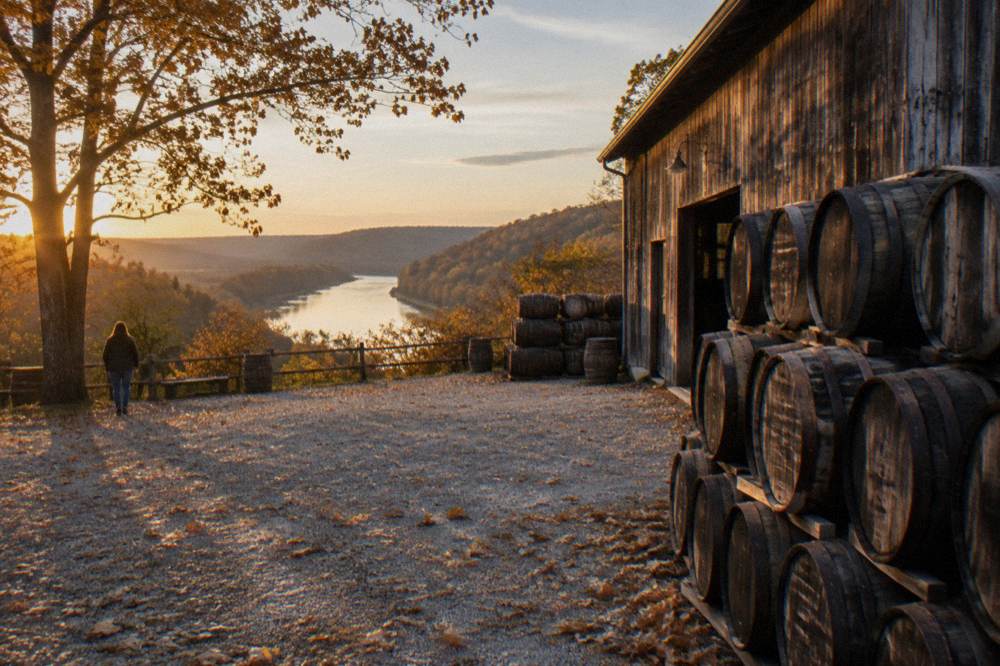
One planning note that catches returning visitors: the Passport & Field Guide program officially retired on July 1, 2025, and the separate Craft Tour was merged into a single Kentucky Bourbon Trail experience before that. Outstanding completion rewards are no longer fulfilled, so any itinerary advice built around collecting stamps is out of date. The trail's own distillery directory is the current source for member stops.
Whichever way you lean, the three formats below are the guided benchmarks worth checking before you commit to driving every leg yourself, from the full three-distillery day to the customizable pickup tour to the walkable Bardstown food day.
Common Questions About Doing The Bourbon Trail On Your Own
Can You Do The Bourbon Trail On Your Own?
Yes. Self-driving is the most common way to tour it: reserve each distillery's tours online in advance, keep to no more than three distillery locations per day and one region per trip, and arrange a designated driver, since rideshare is unreliable in the rural areas where most distilleries sit.
Do You Need Reservations For Kentucky Distillery Tours?
At almost every stop, yes. The official guidance says booking online and in advance is highly recommended, tours can sell out 30, 60 or even 90 days ahead, and planning without reservations is highly discouraged. Buffalo Trace accepts limited daily walk-ups, and Four Roses and Woodford Reserve have visitor centers and shops you can enter without a ticket.
How Many Distilleries Can You Visit In One Day?
The Kentucky Bourbon Trail recommends no more than three distillery locations per day. Each tour and tasting runs 60 to 105 minutes plus check-in, and regions sit up to 100 miles apart, so two or three stops is a full day and four is usually too many.
Can You Take An Uber Between Distilleries In Kentucky?
Not reliably. Uber and Lyft work in Louisville and Lexington but are typically unavailable in rural communities like Bardstown, Lawrenceburg, Clermont and Loretto, and the return leg is where travelers get stranded. Use a designated driver, a pre-booked transportation partner, or a guided tour with pickup instead.
Can You Drink On The Drive Between Distilleries In Kentucky?
No. Under KRS 189.530, open containers are prohibited in the passenger area of any vehicle on public roads, for drivers and passengers alike. Unopened bottles should stay sealed and ride in the trunk. The DUI per se limit is 0.08 percent, and tastings add up quickly across three stops.
Is It Cheaper To Drive Yourself Than Take A Guided Bourbon Tour?
Usually, if your anchor stops are free ones. Buffalo Trace's tours and tastings are complimentary and Four Roses charges nothing to visit its visitor centers, so a self-drive day can cost little beyond fuel and food. Guided full days with transport, tastings and often lunch run roughly $130 to $425 or more per person, but they remove the driving, the calendar juggling and the designated-driver problem.